Natl. J. Physiol. Pharm. Pharmacol. (2026), Vol. 16(1): 1-7
Original Research
10.5455/NJPPP.2026.v16.i1.1
Effects of rapid ascent to high altitude and incidence of
high-altitude illness in third-generation Tibetan descendants
Pankaj Pande1, Swapnil Saikhedker1* and Aravind babu Nooney2
1Department of Physiology, AFMC,Pune, India
2Department of ENT, INHS Asvini, Mumbai, India
*Corresponding Author: Swapnil Saikhedker, Department of Physiology, AFMC,Pune, India.
Email: realswapnil123 [at] gmail.com
Submitted: 27/09/2025 Revised: 30/11/2025 Accepted: 10/12/2025 Published: 25/01/2026
© 2025 National Journal of Physiology, Pharmacy and Pharmacology
This is an Open Access article distributed under the terms of the Creative Commons Attribution-Non Commercial-No Derivatives License (http://creativecommons.org/licenses/by-nc-nd/4.0/), which permits non-commercial re-use, distribution, and reproduction in any medium, provided the original work is properly cited, and is not altered, transformed, or built upon in any way.
Abstract
Background: Third-generation Tibetan descendants in the eastern Himalayas are presumed to possess genetic adaptations that confer resistance to high-altitude hypoxia. However, the impact of rapid ascent on this population, particularly among native highlanders, remains poorly documented. Anecdotal evidence and observational data indicate that highlanders ascending rapidly (e.g., >500 m/day) may experience lower incidence and milder forms of these conditions than lowlanders.
Aim: This study aimed to evaluate physiological effects and incidence of high-altitude illness (HAI) in eastern Himalayan highlanders during rapid ascent to altitudes above 14,300 feet.
Methods: A cross-sectional observational study was conducted in May 2020 at a government hospital in the Eastern Himalayas. Thirty-three male combatants of eastern Himalayan origin, who had resided at lower altitudes for over two years, were assessed using the LLSQ following acute high-altitude exposure.
Results: The prevalence of acute mountain sickness (AMS) was 27.3% (n=9), with equal distribution across mild, moderate, and severe categories (n=3 each). High-altitude pulmonary edema (HAPE) and cerebral edema (HACE) each occurred in 9.1% (n=3) and 3 % (n=1) of patients, respectively. Headache was the most frequent symptom (36.4%), whereas ataxia was the least (3.0%). Lower oxygen saturation (SpO2 ≤ 85%) was significantly associated with AMS (χ²=15.91, p < 0.001). No fatalities were reported.
Conclusion: Third-generation Tibetan highlanders remain vulnerable to AMS, HAPE, and HACE during rapid ascent despite presumed genetic tolerance. Pharmacological prophylaxis and pulse oximetry monitoring are recommended in operational settings to mitigate risk and maintain functional capacity. This study represents the first systematic assessment of HAI incidence in Eastern Himalayan highlanders and highlights the need for high-altitude, tailored preventive strategies in primary healthcare.
Significance: This study holds multidimensional clinical, operational, and scientific importance, particularly in the context of high-altitude medicine and indigenous populations. It debunks the myth of invulnerability in Tibetan highlanders, validates pulse oximetry as a frontline tool, and drives evidence-based policy for the safety of thousands of native highlanders in military, tourism, and labour sectors at extreme altitudes.
Keywords: High altitude, LLSQ, Tibetans, Highlanders Altitude Sickness, Acute Mountain Sickness, High-Altitude Pulmonary edema, High-Altitude Cerebral edema, Hypoxia, Acclimatization.
Introduction
High-altitude illness (HAI) comprises a spectrum of hypoxia-induced syndromes, including acute mountain sickness (AMS), high-altitude pulmonary edema (HAPE), and high-altitude cerebral edema (HACE), typically precipitated by rapid ascent to elevations above 2,500 m (Basnyat, 2014; Bartsch and Swenson, 2013a,b). These conditions result from inadequate acclimatization (Cremona et al., 2002) to hypobaric hypoxia and can pose significant operational and clinical challenges in high-altitude deployments (Taylor, 2011).
Tibetan highlanders exhibit unique genetic adaptations—most notably in the EPAS1 (Bigham and Lee, 2014) and EGLN1 pathways—that confer enhanced oxygen delivery and reduce susceptibility to AMS during gradual ascent (Basnyat, 2014; Longo et al., 2024). However, prolonged residence at low altitudes may lead to de-acclimatization, (He et al., 2013; Sikri et al., 2019; Tissot Van Patot and Gassmann, (2011) diminishing these physiological advantages and potentially increasing vulnerability upon re-ascent.
The Eastern Himalayas host a population of third-generation Tibetan descendants serving in combatant forces. During periods of border conflict, these individuals are rapidly mobilized from lowland garrisons (<1,500 m) to high-altitude posts exceeding 4,350 m (14,300 ft) via road transport, often within hours. This abrupt ascent (Bigham and Lee, 2014) bypasses standard acclimatization protocols and may increase the risk of HAI—even among genetically predisposed highlanders. Despite their ethnic lineage and ancestral altitude exposure, systematic data on their risk of HAI during rapid re-ascent are scarce (Zhang et al., 2021).
This pilot study addresses this gap by investigating HAI outcomes in combatants of Tibetan origin stationed in the Eastern Himalayas.
Specifically, the study aims to:
- The incidence and severity of AMS following rapid ascent were estimated.
- Identifying clinical and physiological predictors of AMS using field-deployable tools such as pulse oximetry, Lake Louis Scoring Questionnaire (LLSQ), (Roach et al., 2018; Roach and Auerbach, 2017) and detailed clinical examination (Taylor, 2011).
- Assess the progression to HAPE (Cremona et al., 2002) and HACE under the operational conditions.
- To generate evidence to inform context-specific primary health care and operational protocols for high-altitude deployments.
This study offers novel insights into altitude re-exposure physiology and contributes to the development of targeted mitigation strategies for HAI in military and humanitarian contexts by focusing on a genetically predisposed yet operationally vulnerable cohort.
Aim
To estimate the prevalence of acute mountain sickness (AMS) among native Eastern Himalayan highlanders (third-generation Tibetans) following rapid ascent to high altitude, using the Lake Louise Scoring Questionnaire (LLSQ) as the diagnostic tool.
Objectives
To study the effects of rapid ascent to high altitude on native Eastern Himalayan highlanders.
Materials and Methods
Study design and setting
This observational cross-sectional study was conducted in May 2020 at a government peripheral hospital in a high-altitude area of East Eastern Himalayas, India. This study assessed to assess the incidence of HAI among deacclimatized high-altitude natives undergoing rapid ascent.
Sampling method and participants
A purposive sampling technique was used to recruit 33 male combatants of Tibetan descent. All participants were third-generation highlanders native to the Eastern Himalayas who had resided at low altitudes (<1,500 m) for more than two years and had not travelled to high-altitude areas (>4,000 m) during that period. Due to operational requirements, these individuals were rapidly deployed by road from 1,525 m (5,000 ft) to 4,360 m (14,300 ft) within approximately four hours.
Inclusion and exclusion criteria
Inclusion criteria comprised all 33 ascenders who presented to the hospital and provided informed consent after being briefed on the study objectives. Exclusion criteria included individuals with conditions that could mimic AMS, such as carbon monoxide poisoning, dehydration, exhaustion, hypoglycemia, hypothermia, and motion sickness (Wu et al., 2009).
Clinical assessment and data collection
Upon arrival at high altitude, participants underwent a basic clinical evaluation (Taylor, 2011), including measurement of resting heart rate, systolic and diastolic blood pressure, mean arterial pressure, respiratory rate, and peripheral oxygen saturation (SpO2). All baseline parameters were within the normal limits. No laboratory investigations were performed due to logistical constraints.
Diagnosis of HAI
The diagnosis of AMS was based on the LLSQ (André et al., 2021) administered within 24 hours of arrival at the high-altitude site. AMS was defined as the presence of headache (mandatory) in an unacclimatized individual with recent altitude gain, accompanied by at least one additional symptom (gastrointestinal disturbance, dizziness, or fatigue), and an Lake Louise Score (LLS) ≥ 3 (Hackett and Roach, 2011). Scores >5 were classified as moderate to severe AMS. Of the 33 participants, 9 (27.3%) met the AMS criteria (André et al., 2021).
Cases of HAPE (Cremona et al., 2002) and HACE were identified based on clinical signs, including respiratory distress, altered mental status, and poor response to initial treatment. Three participants (9.1%) were diagnosed with HAPE, and one participant (3.0%) was diagnosed with HACE. Severe cases were referred to tertiary care facilities at lower altitudes for further management.
Data management and analysis
Detailed histories, including symptom onset, physical activity, sleep duration, pre-induction medical evaluations, and awareness of acclimatization protocols (Sikri et al., 2019), were obtained from all participants. The data were recorded in Microsoft Excel and analyzed using descriptive statistics to determine the prevalence of AMS, HAPE, and HACE (Honigman et al., 1993; Mairer et al., 2009; Cremona et al., 2002).
Ethical approval
This study qualified as minimal-risk observational research conducted during a humanitarian emergency in accordance with the Indian Council of Medical Research National Ethical Guidelines (2017). All participants provided informed consent, and confidentiality was maintained throughout the study.
Results
This observational cross-sectional study, conducted in May 2020 at a government hospital in the Eastern Himalayas, evaluated 33 male combatants of Tibetan descent who underwent rapid road ascent from 1,525 m (5,000 ft) to 4,360 m (14,300 ft) within 4 hours. All participants were native highlanders residing at low altitudes for more than two years, rendering them unacclimatized.
Table 1. Distribution of subjects according to effects (Complication).
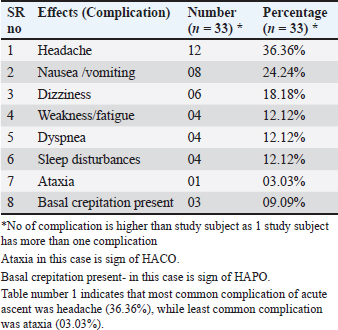
Table 2. Mean distribution of vital parameters among study subjects.
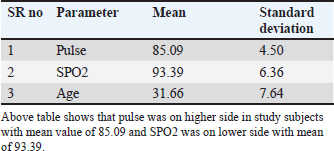
Table 3. Anthropological data.
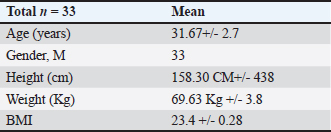
The baseline clinical parameters, including pulse, blood pressure, and SpO2 were within normal limits (Tables 1–3, 5). No laboratory investigations were performed (Hackett and Roach, 2011). AMS was assessed using the LLS at a (LLS) at the deployment altitude of 4,270 m. AMS was diagnosed in 9 participants (27.3%) with LLS ≥ 3, including moderate to severe cases (LLS > 5) (Tables 4 and 6). Three cases (9.1%) of HAPE and one case (3.0%) of HACE, (Table 6) were identified and referred for tertiary care (Hackett and Roach, 2011).
Table 4. Maximum symptom score.
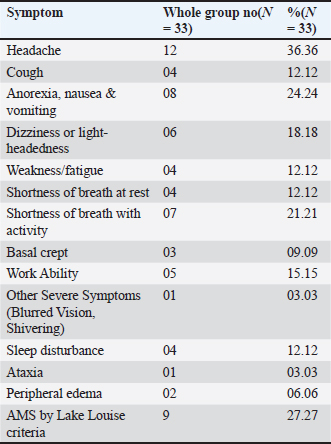
Table 5. Association of acute mountain sickness and SPO2 in study subjects.
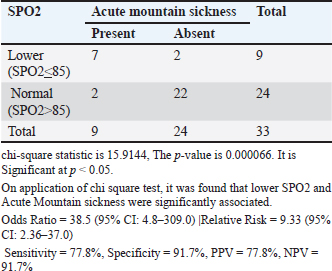
Table 6. Physiological and AMS data.

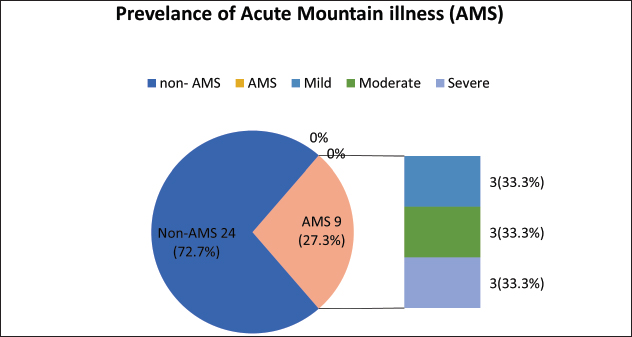
Fig. 1. Prevalence of acute mountain illness (AMS) among Sikkim highlanders using LLSQ. During acute ascent 3 mild AMS and 3 moderate and 3 severe AMS cases were diagnosed based on LLSQ.
The exclusion criteria ruled out alternate diagnoses such as dehydration, hypoglycemia, hypothermia, and motion sickness. Detailed histories and physiological (Gilbert-Kawai et al., 2014) assessments were recorded, and descriptive statistics were used to analyze the data.
These findings highlight the substantial burden of HAI among high-altitude natives following rapid reascent, which is comparable to or exceeds the AMS rates reported in lowlanders after acute ascent. The results underscore the need for acclimatization protocols and early screening in operational deployments.
Discussion
In this pilot study of 33 Tibetan-descendant (Gao, 2024) combatants undergoing rapid road ascent to altitudes exceeding 4,350 m in the Eastern Himalayas, the prevalence (Honigman et al., 1993) of AMS was 27.3%, with HAPE and HACE observed in 9.1% and 3.0% of participants, respectively (Fig. 1 and Table 6). These findings are clinically significant, particularly given the high-altitude ancestry of the participants, which is often assumed to confer protection against hypoxia-related illness.
Tibetan highlanders Gao, (2024), Petousi et al., (2014) are known to possess genetic adaptations—most notably in EPAS1 and EGLN1— (Bigham and Lee, 2014) that enhance oxygen delivery and reduce erythropoietic stress under hypobaric hypoxia (Longo et al., 2025). However, de-acclimatization following prolonged low-altitude residence may diminish these protective effects, as demonstrated in studies of Tibetan (Gao, 2024; Petousi et al., 2014) students returning to Lhasa after years at sea level (Longo et al., 2025). This study confirms that genetic predisposition alone does not eliminate the risk of HAI , especially under conditions of rapid ascent (Longo et al., 2025).
The use of the Lake Louise Scoring System (LLSS) (André et al., 2021) enabled a standardized diagnosis of AMS, which typically presents within 6–12 hours of ascent and is characterized by headache, fatigue, dizziness, and gastrointestinal symptoms. While AMS is often self-limiting, progression to HAPE and HACE can be life-threatening (Bartsch and Swenson, 2013a,b). HAPE results from exaggerated hypoxic pulmonary vasoconstriction leading to noncardiogenic pulmonary edema and has been reported at altitudes as low as 2,000–2,500 m in susceptible individuals. HACE, a severe form of AMS involving cerebral edema, requires immediate intervention with descent and corticosteroids.
In this study, the ascent profile exceeded 2,800 m/day, with sleeping altitudes above 3,000 m, placing participants in the high-risk category for AMS according to wilderness medicine guidelines (Luks et al., 2024; Bartsch and Swenson, 2013a). Ideally, ascent should be limited to <300 m/day above 2,500 m, with rest days every 3–4 days (Bartsch and Swenson, 2013a,b). However, operational constraints during border mobilization often preclude such protocols, necessitating alternative mitigation strategies.
Pharmacologic prophylaxis with acetazolamide (Leaf and Goldfarb, 2007) and dexamethasone has been shown to reduce the incidence of AMS and HACE, while dexamethasone may also benefit HAPE by Cremona et al., (2002) reducing pulmonary inflammation. In this study, limited access to prophylaxis and lack of acclimatization likely contributed to the observed HAI rates.
This study is among the first to document HAI prevalence in combatants of Tibetan descent undergoing rapid terrestrial reascent. This study challenges the assumption of complete genetic protection and highlights the need for field-based screening, structured acclimatization planning, and emergency preparedness protocols in high-risk deployments. Limitations include the small sample size, absence of female participants, and lack of a comparison group. Nonetheless, the findings provide valuable insights for operational medicine and high-altitude public health.
This study has several important limitations that affect how its findings should be interpreted. The small sample size of only 33 participants reduces statistical power and limits generalizability. Since the cohort included only males, gender-based differences in susceptibility and symptom presentation could not be assessed. The absence of a control group, such as lowlanders or acclimatized highlanders, restricts contextual comparisons. Data collection was limited to a short observation window without follow-up, preventing evaluation of symptom progression or delayed onset. Reliance on clinical evaluation and pulse oximetry without laboratory diagnostics may have led to underdiagnosis or misclassification. Additionally, operational constraints in conflict zones and the single-center design limit standardization and broader applicability. Despite these challenges, the study offers preliminary insights into HAI risk among de-acclimatized Tibetan highlanders and underscores the need for larger, multi-center studies with extended monitoring and advanced diagnostic tools (Bigham and Lee, 2014).
Conclusion
Despite well-documented genetic adaptations, (Gilbert-Kawai et al., 2014) third-generation Tibetan highlanders remain vulnerable to HAIs—including AMS, HAPE, and HACE—following rapid ascent after prolonged low-altitude residence. The observed incidence of AMS (27.3%), HAPE (9.1%), and HACE (3.0%) among previously de-acclimatized combatants highlights the physiological strain imposed by abrupt elevation gain, even in ancestrally adapted populations.
The findings are particularly relevant in the context of military and emergency deployments, where rapid terrestrial ascent (Basnyat, 2014) is often required without adequate acclimatization. This study is among the first to document HAI outcomes in combatants of Tibetan descent in the Eastern Himalayas, offering critical insights into the interplay between genetic predisposition, environmental stress, and gaps in reacclimatization. Although resource-limited, primary health centers (PHCs), serve as frontline responders in such high-altitude settings. Their role in early detection, triage, and referral is vital. Incorporating structured screening protocols, preascent (Basnyat, 2014) medical evaluations, and pharmacologic prophylaxis (e.g., acetazolamide (Berger et al., 2022) and dexamethasone) can mitigate risk. Given the association between AMS and reduced SpO2, ensuring access to pulse oximetry and supplemental oxygen at high-altitude posts is essential. To reduce morbidity and preserve operational performance, ascent (Basnyat, 2014) profiles should ideally not exceed 500 m/day above 2,500 m, with rest days every 1,000 m. In scenarios where this is not feasible, tailored interventions—including education, medication, and monitoring—must be prioritized. Further research is warranted to develop context-specific guidelines for high-altitude reexposure in native populations, particularly within the constraints of PHC-based care.
Acknowledgments
All staff of PHC and tertiary centre of eastern Himalayas.’
Conflict of interest
The authors declare no conflict of interest.
Funding
This research received no external funding.
Data availability
All data generated or analyzed during this study are included in this published article and its supplementary information files.
Author contributions
Pankaj Pande: Conception and design of the work, Acquisition, analysis, and interpretation of data for the work, literature search, manuscript preparation and editing. Swapnil Saikhedker: Role-Acquisition, analysis, interpretation of data for the work and drafting, literature search, manuscript preparation, and editing. Aravind Nooney Babu: Role-Acquisition, analysis, and interpretation of data for the work, drafting, data collection, and editing.
References
André, M., Brucato, N., Plutniak, S., Kariwiga, J., Muke, J., Morez, A., Leavesley, M., Mondal, M. and Ricaut, F.X. 2021. Phenotypic differences between highlanders and lowlanders in Papua New Guinea. PLos One 16(7), 253921; doi:10.1371/journal.pone.0253921
Bartsch, P. and Swenson, E.R. 2013a. Acute high-altitude illness. N. Engl. J. Med. 368, 2294–2302; doi:10.1056/NEJMcp1214870
Bartsch, P. and Swenson, E.R. 2013b. Clinical practice: acute high-altitude illnesses. N. Engl. J. Med. 368, 2294–2302; doi:10.1056/NEJMcp1214870
Basnyat, B. 2014. High-altitude pilgrimage medicine. High Alt. Med. Biol. 15(4), 434–439; doi:10.1089/ham.2014.1088
Berger, M.M., Sareban, M., Schiefer, L.M., Swenson, K.E., Treff, F., Schäfer, L., Schmidt, P., Schimke, M.M., Paar, M., Niebauer, J., Cogo, A., Kriemler, S., Schwery, S., Pickerodt, P.A., Mayer, B., Bärtsch, P. and Swenson, E.R. 2022. Effects of acetazolamide on pulmonary artery pressure and prevention of high-altitude pulmonary edema after rapid active ascent to 4,559 m. J. Appl. Physiol. (1985). 132(6), 1361–1369; doi: 10.1152/japplphysiol.00806.2021
Bigham, A.W. and Lee, F.S. 2014. Human high-altitude adaptation: forward genetics meets the HIF pathway. Genes Dev. 28(20), 2189–2204; doi:10.1101/gad.250167.114
Cleveland Clinic. High-altitude pulmonary edema (HAPE). 2024 [cited 2026 Jan 14]. Available from: https://my.clevelandclinic.org/health/diseases/15111-high-altitude-pulmonary-edema
Cremona, G., Asnaghi, R., Baderna, P., Brunetto, A., Brutsaert, T., Cavallaro, C., Clark, T.M., Cogo, A., Donis, R., Lanfranchi, P., Luks, A., Novello, N., Panzetta, S., Perini, L., Putnam, M., Spagnolatti, L., Wagner, H. and Wagner, P.D. 2002. Pulmonary extravascular fluid accumulation in recreational climbers: a prospective study. Lancet. 359(9303), 303–309; doi: 10.1016/s0140-6736(02)07496-2
Gao, C., Qi, G.D., Wang, D., Zhang, Z.H., Liu, Z.X., Ge, R.D., Yong, Z. and Yan, L.E. 2024. Incidence and risk factors of severe acute high-altitude illness in northern Tibetan Plateau. Front. Public. Health. 12, 1400236; doi:10.1016/j.fph.2024.0236
Gilbert-Kawai, E.T., Milledge, J.S., Grocott, M.P. and Martin, D.S. 2014. King of the mountains: Tibetan and Sherpa physiological adaptations for life at high altitude. Physiol. (Bethesda). 29(6), 388–402; doi:10.1152/physiol.00018.2014
Hackett, P.H. and Roach, R.C. 2011. High-altitude medicine. 6th ed. Philadelphia: elsevier. 6th ed., Elsevier.
He, B., Wang, J., Qian, G., Hu, M., Qu, X., Wei, Z., Li, J., Chen, Y., Chen, H., Zhou, Q. and Wang, G. 2013. Analysis of high-altitude de-acclimatization syndrome after exposure to high altitudes: a cluster-randomized controlled trial. PLos One 8(5), e62072; doi:10.1371/journal.pone.0062072
Honigman, B., Theis, M.K., Koziol-Mclain, J., Roach, R., Yip, R., Houston, C. and Moore, L.G. 1993. Acute mountain sickness in a general tourist population at moderate altitudes. Ann. Intern. Med. 118(8), 587–592; doi:10.7326/0003-4819-118-8-199304150-00003
Huerta-Sánchez, E., Jin, X., Asan., Bianba, Z., Peter, B.M., Vinckenbosch, N., Liang, Y., Yi, X., He, M., Somel, M., Ni, P., Wang, B., Ou, X., Huasang., Luosang, J., Cuo, Z.X.P., Li, K., Gao, G., Yin, Y., Wang, W., Zhang, X., Xu, X., Yang, H., Li, Y., Wang, J., Wang, J. and Nielsen, R. 2014. Altitude adaptation in Tibetans caused by introgression of Denisovan-like DNA. Nature 512(7513), 194–197.
Leaf, D.E. and Goldfarb, D.S. 2007. Mechanisms of action of acetazolamide in the prophylaxis and treatment of acute mountain sickness. J. Appl. Physiol. (1985). 102(4), 1313–1322; doi:10.1152/japplphysiol.01572.2005
Longo DL, Fauci AS, Kasper DL, Hauser SL, Jameson JL, Loscalzo, J., Holland, S. and Langford, C. Harrison’s principles of internal medicine. 22nd ed. New York: McGraw Hill; 2025.
Luks, A.M., Beidleman, B.A., Freer, L., Grissom, C.K., Keyes, L.E., Mcintosh, S.E., Rodway, G.W., Schoene, R.B., Zafren, K. and Hackett, P.H. 2024. Wilderness Medical Society clinical practice guidelines for the prevention, diagnosis, and treatment of acute altitude illness: 2024 update. Wilderness Environ. Med. 35(1 Suppl), 2S–19S; doi:10.1016/j.wem.2023.05.013
Luks, A.M., Mcintosh, S.E., Grissom, C.K., Auerbach, P.S., Rodway, G.W., Schoene, R.B., Zafren, K. and Hackett, P.H. 2010. Wilderness Medical Society consensus guidelines for the prevention and treatment of acute altitude illness. Wilderness. Environ. Med. 21(2), 146–155; doi:10.1016/j.wem.2010.03.002
Mairer, K., Wille, M., Bucher, T. and Burtscher, M. 2009. Prevalence of acute mountain sickness in the Eastern Alps. High. Alt. Med. Biol. 10(3), 239–245; doi:10.1089/ham.2008.1091
Muza, S.R., Beidleman, B.A. and Fulco, C.S. 2010. High altitude medicine & biology. High Altitude Med. Biol. 11(2), 87–92; doi:10.1089/ham.2010.1006
Petousi, N., Croft, Q.P., Cavalleri, G.L., Cheng, H.Y., Formenti, F., Ishida, K., Lunn, D., McCormack, M., Shianna, K.V., Talbot, N.P., Ratcliffe, P.J. and Robbins, P.A. 2014. Tibetans living at sea level have a hyporesponsive hypoxia-inducible factor system and blunted physiological responses to hypoxia. J. Appl. Physiol. (1985). 116(7), 893–904; doi:10.1152/japplphysiol.00707.2013
Roach, R.C. and Auerbach, P.S. 2017. Mountain medicine. In Wilderness medicine. Roach, R.C. and Auerbach, P.S 7th, Elsevier, pp: 2–39.
Roach, R.C., Hackett, P.H., Oelz, O., Bärtsch, P., Luks, A.M., Macinnis, M.J. and Baillie, J.K. 2018. The 2018 Lake Louise acute mountain sickness score. High Alt. Med. Biol. 19(1), 4–6; doi:10.1089/ham.2017.0164
Schneider, M., Bernasch, D., Weymann, J., Holle, R. and Bärtsch, P. 2002. Acute mountain sickness: influence of susceptibility, preexposure and ascent rate. Med. Sci. Sports. Exerc. 34, 1886–1891.
Sikri, G., Kotwal, A., Singh, S.P., Bhattacharya, S., Bhatia, S.S., Dutt, M. and Srinath, N. 2019. Is it time to revise the high-altitude acclimatization schedule at high altitude? Evidence from a field trial in the western Himalayas. Med. J. Armed Forces India 75(3), 251–258; doi:10.1016/j.mjafi.2018.01.001
Taylor, A. 2011. High-altitude illnesses: physiology, risk factors, prevention, and treatment. Rambam Maimonides Med. J. 2(1), 22; doi:10.5041/RMMJ.10022
Tissot Van Patot, M.C. and Gassmann, M. 2011. Hypoxia: adapting to high altitude by mutating EPAS-1, the gene encoding HIF-2α. High. Alt. Med. Biol. 12(2), 157–167; doi:10.1089/ham.2010.1099
Tremblay, J.C. 2023. Mountains of research: where and whom high-altitude physiology has overlooked. J. Physiol. 111, e285454; doi:10.1113/JP285454
Wu, T.Y., Ding, S.Q., Liu, J.L., Yu, M.T., Jia, J.H., Chai, Z.C., Dai, R.C., Zhang, S.L., Li, B.Y., Pan, L., Liang, B.Z., Zhao, J.Z., Qi, de T., Sun, Y.F. and Kayser, B. 2007. Who should not go high: chronic disease and work at altitude during construction of the Qinghai-Tibet railroad. High Alt Med Biol. 8(2), 88–107; doi: 10.1089/ham.2007.1015
Zhang, X., Witt, K.E., Bañuelos, M.M., Ko, A., Yuan, K., Xu, S., Nielsen, R. and Huerta-Sanchez, E. 2021. The history and evolution of the Denisovan-EPAS1 haplotype in Tibetans. Proc. Natl. Acad. Sci. USA. 118(22), e2020803118; doi:10.1073/pnas.2020803118