





| Original Research | ||
Natl. J. Physiol. Pharm. Pharmacol. (2026), Vol. 16(1): 41-55 Original Research A case-control study to assess and compare cognitive functions among chess players and non-chess players aged 11 to 16 years in western IndiaYuvraj Rananajay Singh*, Swapnali Saurabh Kadam, and Anukant MitalRajiv Gandhi Medical College and Chhatrapati Shivaji Maharaj Hospital, Thane, India (affiliated with Maharashtra University of Health Sciences, Nashik, Maharashtra, India) *Corresponding Author: Yuvraj Rananajay Singh. Rajiv Gandhi Medical College and Chhatrapati Shivaji Maharaj Hospital, Thane, India (affiliated with Maharashtra University of Health Sciences, Nashik, Maharashtra, India). Email: omeleven14 [at] gmail.com Submitted: 12/11/2025 Revised: 22/01/2026 Accepted: 01/02/2026 Published: 11/05/2026 © 2025 National Journal of Physiology, Pharmacy and Pharmacology
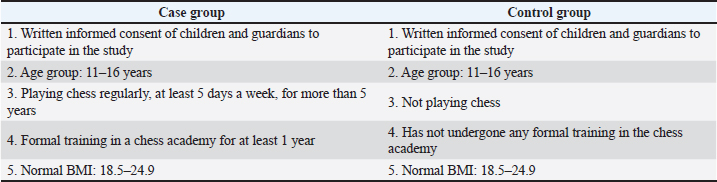
ABSTRACTBackground: Chess has long been used to evaluate fundamental cognitive functions, including memory and problem solving, where the executive function is crucial. Studies have shown that chess enables young players to gain advantages in various cognitive domains. Aim: This study aimed to compare and assess cognitive functions among chess players and non-chess players aged 11–16 years in Western India. Methods: The study was conducted in chess players (case) and non-chess players (control) aged 11–16 years with a normal body mass index and no cognitive impairment (Mini-Mental State Examination test >24). Participants were assessed for cognitive functions using several tests: executive function and selective attention (Stroop and Eriksen Flanker test), working memory (N-back test), reaction time (Deary–Liewald task), and intelligence (Bhatia Battery Tests of Intelligence). Results: Significant group differences were found for Stroop congruent time (p < 0.001), Stroop incongruent time (p < 0.001), Stroop interference (p < 0.001), Eriksen Flanker congruent time (p < 0.001), Eriksen Flanker incongruent time (p < 0.001), Flanker interference (p < 0.001), N-back (working memory) correct response (p < 0.001), Deary–Liewald simple reaction time (p < 0.001), Deary–Liewald choice reaction time (p < 0.001), and Bhatia’s Battery Tests of Intelligence Quotient (IQ) (p < 0.001), showing that chess players demonstrated better in respective cognitive functions. Conclusion: Chess players exhibited better cognitive functions across various domains, including selective attention, executive function, working memory, reaction time, and IQ, than non-chess players. Keywords: Cognitive function, Chess players, Selective attention, Executive function, Working memory, Reaction time. BackgroundChess includes high-level cognitive characteristics, requires sophisticated problem-solving ability, and has a positive impact on the scholastic accomplishment and mental growth of individuals who play it. According to studies, chess enhances spatial reasoning, long-term planning, decision-making, memory, cognitive development, academic achievement, and strategic, creative, and critical thinking (Ortiz-Pulido et al., 2019). Chess has traditionally been used to examine basic cognitive processes (memory and problem-solving), in which the executive function plays a key role (Fuentes-García et al., 2019). Chess practice stimulates and reinforces the associated cognitive processes, resulting in learning-induced neuroplasticity (Ahmed et al., 2017). Functional magnetic resonance imaging (MRI) studies reveal activation in key brain regions during chess gameplay. Atherton et al. (2003) identified activation in the premotor cortex, dorsolateral prefrontal cortex, parietal cortex, occipital cortex, and cerebellum. Similarly, Krawczyk et al. (2011) found activation in the posterior cingulate cortex, anterior temporal cortex, parietal cortex, and orbitofrontal cortex during chess tasks. Bilalić et al. (2011) demonstrated activation in the dorsolateral prefrontal cortex, posterior parietal cortex, and occipital cortex in expert chess players. These findings suggest that chess engages a distributed network of brain regions involved in cognitive functions. For students with special needs, educators are considering adopting this sport as a training approach to build and boost cognitive functions, such as concentration, memory, creativity, and reasoning. Studies have also suggested the potential benefits of chess practice on brain function, physical health, and behavior, highlighting its utility as a learning and therapeutic tool (Franklin et al., 2020). In addition, chess may serve as a protective strategy against dementia and cognitive decline in older adults by improving cognitive reserve (Lillo-Crespo et al., 2019). Mechner (2010) highlighted chess as an ideal model for cognitive behavior research because of its distinct decision-making nature, cognitive engagement, and suitability for quantitative evaluation. Chess competency requires the mental calculation of future positions, with proficiency scores reflecting advancements in mental processing ability. It has been dubbed “the drosophila of cognition studies and psychometrics,” underscoring its importance in cognitive research (Mechner, 2010). Duan et al. (2010) found that 11- to 12-year-old children’s frontal lobes are well-developed for higher-level cognitive activities, aligning with the critical role of the frontal lobe in human behavior. García-Madruga et al. (2016) noted significant cognitive resource efficiency growth between ages 10 and 12 years, with noticeable performance differences emerging during this period. Icenogle et al. (2019) observed adult-like performance in verbal fluency, inhibition, and working memory around ages 15–16 years, indicating cognitive maturity by the age of 16 years based on data from over 900 individuals aged 10–30 years. Notably, studies linked underweight and obesity to lower cognitive function (Meo et al., 2019; Muley et al., 2020), suggesting that body mass index (BMI) is a potential confounding factor. Hence, the age group (11–16 years) and normal BMI were included in the inclusion criteria. While more research is warranted to comprehensively understand the cognitive effects of chess, the existing literature highlights its numerous reported benefits (Franklin et al., 2020). Despite some studies indicating a correlation between chess proficiency and higher intelligence, research on the impact of chess practice on cognitive ability in Western India is limited (Sala et al., 2015). To address this gap, our study aims to compare cognitive functions among chess players and non-chess players aged 11–16 years in Western India. This study will provide scientific data on neurocognitive functioning in chess players and will aid in illustrating the impact of chess on cognitive functions. If improvements are recognized, chess may be used as a teaching and therapeutic tool. Based on a preliminary PubMed search conducted until January 2023, we did not find any prior study assessing multiple cognitive functions among chess-playing children aged 11–16 years in Western India. MethodsThe authors have read the STROBE statement-checklist of items, and the manuscript was prepared and revised in accordance with the items [ref: https://www.strobe-statement.org/] (von Elm et al., 2008). Study designAn observational case-control study was conducted in the Department of Physiology of Rajiv Gandhi Medical College and Chhatrapati Shivaji Maharaj Hospital, Thane, India. A convenience sampling technique was used, and data collection was conducted for 2 months after ethics approval. Ethical approval of the study was given by the Institutional Ethics Committee, Rajiv Gandhi Medical College and Chhatrapati Shivaji Maharaj Hospital, Thane (RGMC ICEC Approval letter number: RGMC/CSMH/ICEC/262/06/2022). We reached out to schools and chess academies to recruit participants. Announcements were made during school assemblies, parent–teacher meetings, and chess academy sessions. Information sheets and consent forms were distributed to parents and guardians to explain the study’s purpose, procedures, and inclusion criteria. To verify self-reported data on chess playing frequency and duration, information was cross-validated with parents and instructors. Inclusion and exclusion criteriaInclusion criteriaTable 1 shows the inclusion criteria. Exclusion criteria1. Do not consent to participate in the study 2. Cognitive impairment Mini-Mental State Examination (MMSE test score <24) 3. Age: <11 and >16 years 4. Participants with a non-normal BMI (i.e., <18.5 and >24.9 kg/m2) Table 1. Inclusion criteria for the case and control groups.
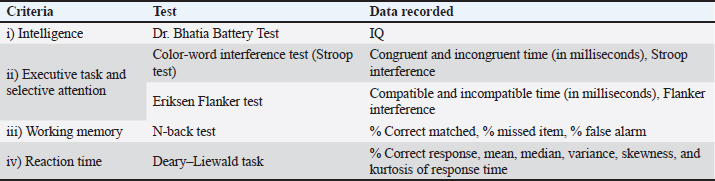
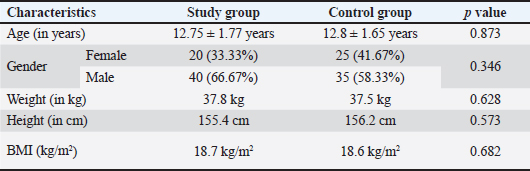
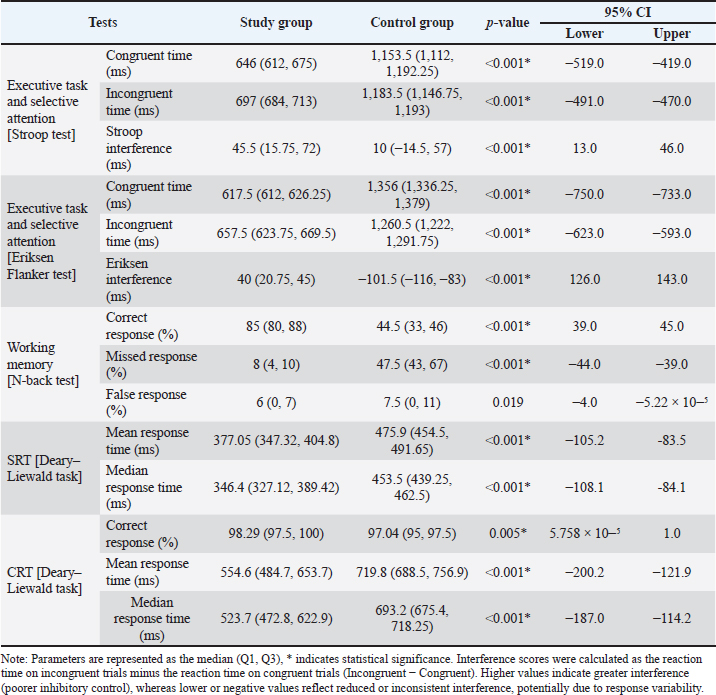
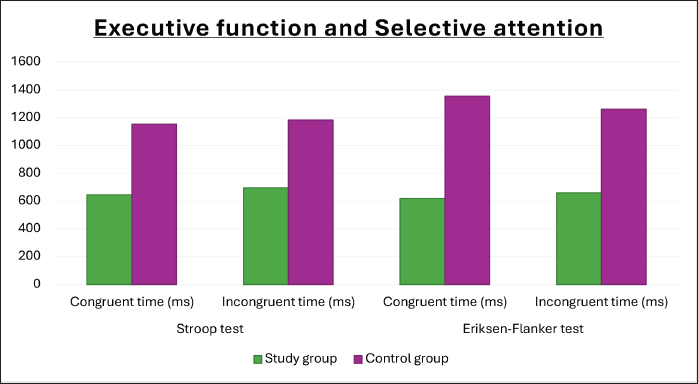
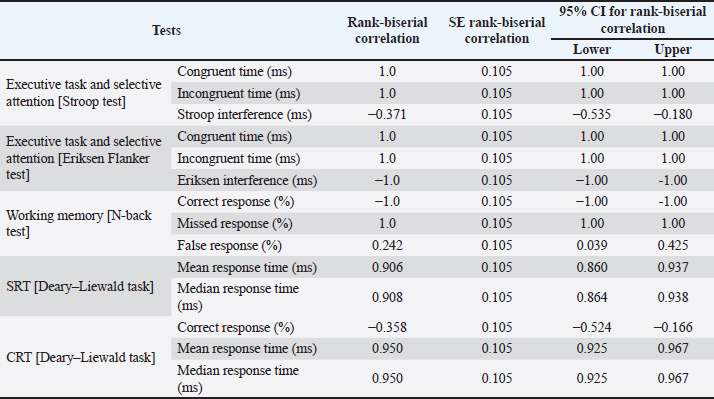
Outcome measuresPrimary objectiveTo compare the cognitive functions of chess players and non-chess players aged 11–16 years in Western India Secondary objective1. To assess the cognitive functions among chess players aged 11–16 years in Western India 2. To assess the cognitive functions among non-chess players aged 11–16 years in Western India HypothesisChess playing is significantly associated with higher cognitive function in children aged 11–16 years in western India. Ethical considerationThe study was conducted in accordance with the ICH-GCP guidelines, the Declaration of Helsinki (October 2013), the ICMR National Ethical Guidelines for Biomedical and Health Research Involving Human Participants (2017), and the ICMR National Ethical Guidelines for Bio-Medical Research involving Children (2017). Assent and informed written consent were obtained from the subjects and their parents or guardians, respectively, for this study. The procedure, purpose, nature, and expected effects of the study were explained to them, and all their questions were satisfactorily answered. Data collection tools1. Questionnaire comprising the following: i) A self-administered demographic details section consisting of closed questions with quantitative answers and dichotomous options. ii) The interviewer administered the MMSE test (Folstein et al., 1975). 2. Cognitive function tests for: i) Intelligence: Dr. Bhatia Battery Tests of Intelligence (Bhatia, 1955) It is one of India’s most widely used, pre-validated, and reliable intelligence tests. The battery calculates the overall Intelligence Quotient (IQ) based on all five subtests: Koh’s Block design test, Pass along test, Pattern drawing test, Immediate memory test, and Picture construction test. ii) Executive task and selective attention: 1. Color-word interference test (Stroop test) (Stoet, 2010, 2017). In this test, the participant was asked to read the font color instead of the meaning of the word and press the corresponding key on the keyboard. In this test, “congruent” means the font color is the same as the meaning of the word, whereas “incongruent” means the font color is different from the meaning of the word. 2. Erikson-Flanker test (Stoet, 2010, 2017). In this test, participants see five letters at a time, and they must respond to the middle letter. If the middle letter is X or C, then the participant will have to press A on the keyboard, whereas if the middle letter is V or B, then the participant will have to press L on the keyboard. iii) Working memory: N-back test (Stoet, 2010, 2017). Specifically, a 2-back test was used, and subjects were asked to press the “m” key on the keyboard whenever the stimuli were the same as those in the two trials before, whereas no response was given if they did not match. iv) Reaction time: Deary Liewald task software (David and Ian, 2016). This test was conducted in two parts, i.e., a simple reaction time (SRT) task and a choice reaction time (CRT) task. In the SRT task of this test, the subject had to press any key on the keyboard as soon as “X” was seen on the screen. In the CRT task of this test, as soon as “X” is displayed on one of the four white boxes on the screen, the subject had to press the corresponding key (i.e., Z/X/C/V) on the keyboard. Two tests were chosen to assess executive function and selective attention: The Stroop test offers simplicity and a strong theoretical basis, demonstrating interference between word color naming and the word itself, with sensitivity to cognitive impairments (Stroop, 1935). The Eriksen Flanker test provides a specific measure of cognitive control, assessing the ability to suppress irrelevant information amid conflicting stimuli, offering insights into selective attention (Eriksen and Eriksen, 1974). The Stroop test’s limitations include practice effects and cultural biases, while the Eriksen Flanker test may face complexity and confounding factors like response competition (Macleod, 1991; Fan et al., 2002). In conclusion, both tests have strengths and weaknesses. Procedure1. First, a demographic questionnaire was handed to the participants, and their height, weight, and body mass index (BMI) were measured. 2. Then, a MMSE test was administered. The MMSE is a tool that can be used to examine mental health in a systematic and thorough manner. It is an 11-question test that examines five cognitive aspects: orientation, registration, attention and calculation, recall, and language. A score of ≤23 indicates that the participant is suffering from cognitive impairment (Folstein et al., 1975). 3. Then, cognitive functions were assessed in subjects satisfying all the inclusion criteria using the following tests (Table 2). The tests followed a fixed order with practice trials before each task and mandatory 2–3 minutes rest intervals to minimize fatigue: Stroop test→ Flanker test→ N-back test→ Deary Liewald task→ Dr. Bhatia Battery Test. Statistical analysisSample size: A post hoc power analysis was conducted using G*Power (Faul et al., 2007, 2009) software to determine the sample size adequacy. Given the observed effect size (Cohen’s d=0.863) from our study, an alpha error probability of 0.05, and equal group sizes of 60 participants each, the analysis yielded a power of 0.997. The collected data were entered in a Microsoft Excel spreadsheet, and the IBM Statistical Package for Social Sciences was used for further analysis. Skewness, kurtosis, Kolmogorov-Smirnov test, QQ plot, and histogram were used to check the data’s normality. For a non-normal distribution, the Mann–Whitney U test was used. The distribution shape was then evaluated using a box plot and histogram, and if the shape was similar, the median was considered; if it was not, the mean rank was counted. Moreover, the p-value and effect size were calculated. Further, the Karl Pearson correlation and bivariate linear regression were performed. ResultsThe subjects who fulfilled the inclusion criteria were included, and the study was conducted on 60 subjects in the case group and 60 subjects in the control group. Table 3 presents the demographic data between the study and control groups. The study included the study group with a mean age of 12.75 ± 1.77 years and 12.8 ± 1.65 years for the control group. The age distribution for study group: 37% [11 years], 17% [12 years], 15% [13 years], 8% [14 years], 13% [15 years], and 10% [16 years], whereas the age distribution for control group: 30% [11 years], 18% [12 years], 22% [13 years], 10% [14 years], 12% [15 years], and 8% [16 years]. The sex distribution was 40 (66.67%) males and 20 (33.33%) females for the case and 35 (58.33%) males and 35 (58.33%) females for the control. Table 4 shows the comparison of cognitive functions between the study and control groups. All cognitive function parameters were not normally distributed (Kolmogorov–Smirnov test=<0.001). Therefore, we conducted group comparisons using the Mann–Whitney U test and estimated effect sizes using rank-biserial correlation (rᵣᵦ) with 95% confidence intervals. As shown in Figure 1, executive task and selective attention using the Stroop test showed a median congruent time of 646 ms for the study group and 1,153.5 ms for the control group, which was statistically significant (p < 0.001) with an effect size (rᵣᵦ) of 1.00 (large). Executive task and selective attention using the Eriksen Flanker test showed a median congruent time of 617.5 ms for the study group and 1,356 ms for the control group, which was statistically significant (p < 0.001) with an effect size of 1.00 (large). As shown in Tables 4 and 5, the working memory performance assessed using the N-back task showed significantly higher correct response rates and memory retention accuracy in chess players than in controls (p < 0.001), with large effect sizes (rᵣᵦ=± 1.000). The false response rates were also significantly lower in chess players (p=0.019), with a small-to-moderate effect size (rᵣᵦ=0.242, 95% CI: 0.039–0.425). SRT using the Deary–Liewald task reported median response times of 346.4 ms and 453.5 ms for the study and control groups, respectively, and was statistically significant (p < 0.001) with an effect size of rᵣᵦ > 0.90 (large). CRT accuracy and latency also differed significantly between groups (p < 0.001), with chess players exhibiting superior accuracy and faster responses, accompanied by large to very large effect sizes (rᵣᵦ ranging from −0.358 to 0.950). Table 2. Details of cognitive functions, tests, and recorded data.
Table 3. Comparison of demographic data between study and control groups.
Table 4. Comparison of cognitive functions between study and control groups.
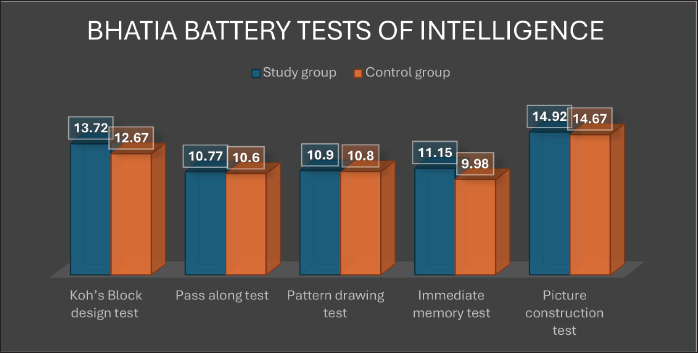
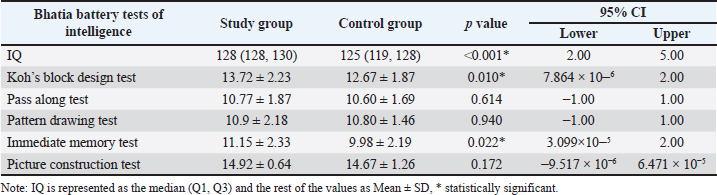
Figure 2 shows the various values of the subtests of Bhatia’s Battery Tests of Intelligence between the study and control groups. The IQ was measured using the Bhatia Battery Tests of Intelligence and reported as 128 and 125 for the study and control groups, respectively, and was statistically significant (p < 0.001) as represented in Table 6. The Karl Pearson correlation analysis indicates significant associations between cognitive task performance measures and IQ scores within our sample. Specifically, IQ was significantly negatively correlated with Stroop interference (r=−0.375, p=0.003) and significantly positively correlated with Flanker interference (r=0.507, p < 0.001). These findings suggest that higher IQ scores are associated with lower levels of Stroop interference and higher levels of flanker interference. Additionally, a significant positive correlation is observed between flanker interference and SRT (r=0.523, p < 0.001), indicating that individuals with greater flanker interference tended to exhibit longer mean response times in the SRT task. However, no significant correlations were found between IQ and mean response times in the SRT and CRT tasks.
Fig. 1. Executive function and selective attention. Table 5. Effect size for cognitive functions between chess and non-chess players.
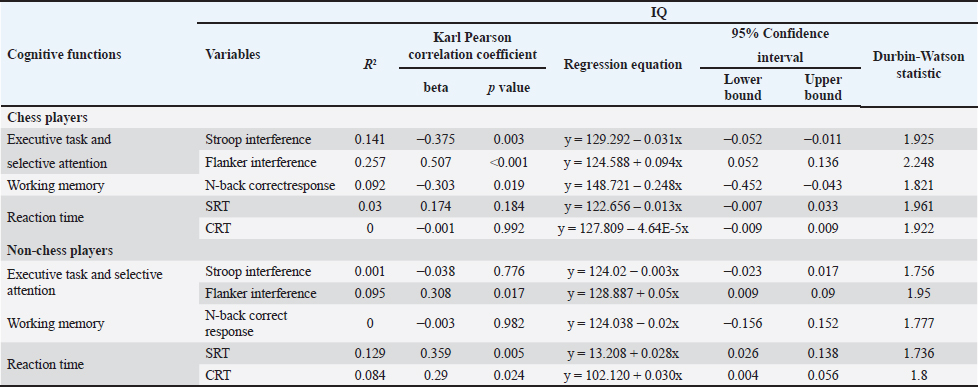
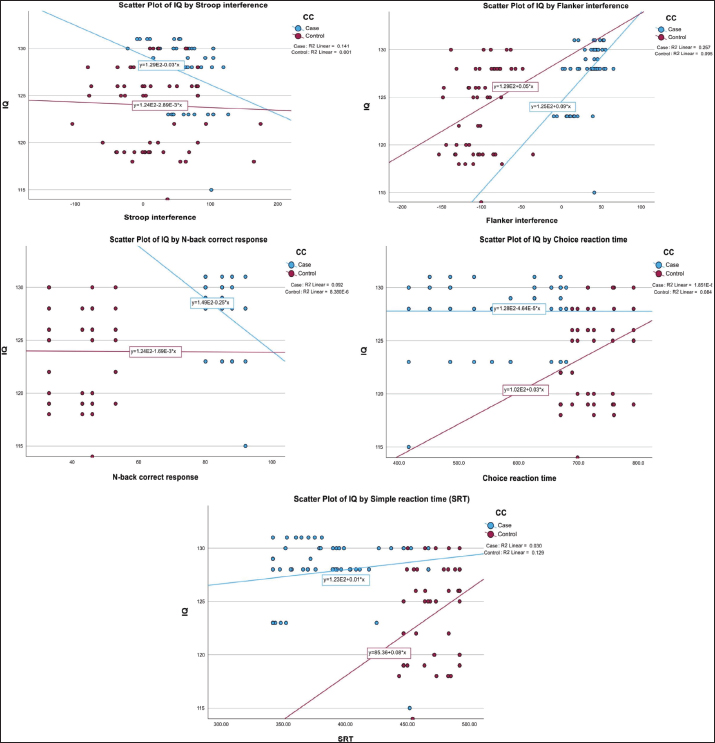
Table 7 shows the results of the bivariate linear regression analysis of cognitive variables and IQ, whereas Figure 3 shows a scatter plot between cognitive test variables and IQ. DiscussionThis study focuses on unraveling the intricate relationship between chess expertise and specific cognitive processes, including executive function, selective attention, working memory, reaction time, and intelligence. The key findings of our analysis revealed significant differences in cognitive function between chess players and non-players, with chess players demonstrating superior performance across various cognitive tasks. These cognitive domains were carefully chosen because of their paramount importance in understanding the cognitive mechanisms underlying chess performance and expertise. Executive function, which encompasses abilities such as goal-oriented planning, flexible strategy formulation, and inhibition, plays a critical role in navigating complex decision-making tasks inherent to chess gameplay (Diamond, 2013; Unterrainer et al., 2017). Selective attention, which is crucial for filtering relevant information amid distractions, is essential for maintaining focus during chess matches (Navon and Gopher, 1979). Working memory, which is responsible for the temporary storage and manipulation of information, is indispensable for mentally simulating future moves and maintaining strategic plans in chess (Engle and Kane, 2004). Reaction time, which reflects the speed of processing sensory stimuli and generating responses, directly influences the efficiency of chess decision-making and tactical execution (Irons et al., 2014). Finally, the IQ serves as a broader measure of cognitive capacity, encompassing various cognitive abilities relevant to chess performance, such as problem-solving, pattern recognition, and decision-making (Sala et al., 2017). Our study aims to provide a comprehensive understanding of the cognitive underpinnings of chess expertise and its implications for cognitive functioning by examining these specific cognitive processes.
Fig. 2. Bhatia’s battery tests of intelligence. Table 6. Comparison of Bhatia’s tests of intelligence between the study and control groups.
Executive task and selective attentionOur study showed that chess players took significantly (p value < 0.001) less congruent and incongruent time in both the Stroop test and the Eriksen Flanker test than non-chess players. Chess players exhibited significantly faster completion times in both the Stroop and Eriksen Flanker tests compared with non-chess players (p < 0.001). While Unterrainer et al. (2006) associated chess with improved planning and problem-solving skills, Nejati and Nejati (2012) found no preference in chess players across the Stroop test stages. Table 7. Linear regression between the IQ and cognitive variables.
Fig. 3. Scatter plot between cognitive test variables and IQ. Furthermore, the Karl Pearson correlation analysis among chess players showed that the correlation between Stroop interference and IQ was statistically significant (r=−0.375, p < 0.002). The linear regression analysis for chess players further supported this finding, showing that Stroop interference significantly predicted IQ (β=−0.375, p=0.003). The R2 was 0.141; that is, 14.1% of the variance in IQ was predictable from the level of Stroop interference and falls within the moderate range. The model demonstrated a good fit as evidenced by the Durbin-Watson statistic (1.925). These results suggest that individuals with greater Stroop interference, which is indicative of poorer executive function, tend to have lower IQ scores. Conversely, the correlation between Stroop interference and IQ was extremely weak and non-significant in non-chess players (r=−0.038, p=0.388), with no explanatory power in regression analysis (R²=0.001). This suggests that Stroop interference is not linked to the IQ levels of our non-chess players. Similarly, the correlation between Flanker interference and IQ in chess players was statistically significant (r=+0.507, p < 0.001), explaining 25.7% (moderate effect) of IQ variance, while non-chess players also showed a moderate positive correlation (r=0.308, p=0.008), with Flanker interference explaining 9.5% of IQ variance. These findings suggest that the performance of chess and non-chess players on the Flanker interference task is positively associated with IQ scores. Arffa et al. (2007)found a significant link (F(1,123)=25.87, p < 0.001) between executive function indices, including the Stroop color-word condition, and intelligence. Similarly, Friedman et al. (2008)revealed that executive functions, akin to Eriksen interference, predict changes in IQ over time, suggesting their role in cognitive development. While some studies directly correlate IQ with cognitive control tasks, others propose a complex relationship influenced by mediating factors. For instance, a meta-analysis by Miyake and Friedman (2012) identified distinct yet correlated executive functions, such as inhibitory control and working memory, contributing to both IQ and interference task performance. Chess players excel in tasks demanding executive functions, as evidenced by their swift responses in tests such as the Stroop Color-Word Interference and Eriksen Flanker. In chess, the ability to strategize and anticipate opponents’ moves may contribute to the development of these executive functions. Our findings suggest that the association between cognitive tasks, such as Stroop and Flanker interference, and IQ varies based on chess involvement. Chess players showed significant associations between these tasks and IQ, emphasizing the role of executive function in their IQ levels. Conversely, this relationship appears to be weaker in non-chess players, suggesting that other factors influence their IQ levels. Working memoryIn our study, chess players outperformed non-chess players, suggesting that chess players have superior working memory. Among chess players, a moderate negative correlation (r=− .303, p=0.009) between N-back correct responses and IQ was found, indicating that better working memory is linked with lower IQ scores. This inverse relationship between working memory and IQ is common and could be attributed to various factors, such as the complexity of the tasks involved in each assessment and the specific cognitive processes they measure. The regression model revealed that N-back correct responses significantly predicted IQ (β=−0.303, p=0.019), explaining 9.2% of the variance in the IQ score. The Durbin-Watson statistic of 1.821 suggests that the model’s assumptions are met and its data fit is reliable. Conversely, the correlation between IQ and N-back correct responses was extremely weak and non-significant in non-chess players (r=−0.003, p=0.491). Regression analysis supported this, indicating no significant prediction of IQ by N-back performance. The results suggest that the performance of non-chess players on the N-back task is not associated with IQ levels. Studies have explored the relationship between IQ and working memory, with findings suggesting that the nature of this relationship is complex and multifaceted, although there is often a significant correlation (Colom et al., 2007; Unsworth et al., 2014). Engle et al. (1999) found a moderate to strong correlation between IQ and working memory capacity (r=0.50–0.80). Jaeggi et al. (2008) demonstrated the potential of working memory training to improve IQ (F(1,68)=6.38; p < 0.05; ηp2=0.09). Chess players demonstrated superior working memory, likely honed by the game’s complexity and demanding nature. Our findings reveal disparities in the relationship between working memory and IQ in chess players versus non-chess players. Higher working memory correlated paradoxically with lower IQ among chess players, suggesting unique cognitive processes prioritizing strategic thinking over conventional intelligence measures. Conversely, non-chess players showed no significant correlation between working memory and IQ, emphasizing cognitive complexity beyond specialized domains. Reaction timeOur research found that chess players exhibit faster reaction times than non-players. However, in chess players, the correlation between IQ and SRT was weak (r=+ 0.174, p=0.092), and the correlation between IQ and CRT was extremely weak (r=−0.001, p=0.496). Regression analysis confirmed that neither SRT nor CRT significantly predicted IQ in chess players (SRT: β=0.174, p=0.184; CRT: β=−0.001, p=0.992). These results suggest that the predictive power of reaction time on IQ levels is limited. Conversely, both SRT and CRT showed moderately positive correlations with IQ among non-chess players (SRT: r=0.359, p=0.002; CRT: r=0.290, p=0.012). Regression analysis further supported these correlations, suggesting that mean response times on both tasks have a discernible impact (SRT: β=0.359, p=0.005; CRT: β=0.290, p=0.024) on non-chess players’ IQ levels. Elamaran et al. (2016) examined recognition reaction time and reported that chess players had faster visual reaction times than non-chess players. This could be because chess players have more visual stimulus experience, better perceptual skills, and faster perception processing. They speculate that compared with non-chess players, chess players are exposed to a visual stimulus domain, which enhances visual attention and processing speed. Sheridan and Reingold (2017) showed that the task strongly differentiated chess skills, i.e., the reaction time was more than four times faster for experts than novices. Chess players typically demonstrate quicker reaction times compared to non-chess players, as seen in tasks such as the Eriksen Flanker Test. This heightened processing speed likely stems from continuous practice and exposure to rapid decision-making in chess. The divergent findings regarding the relationship between reaction time and IQ in chess and non-chess players may be due to skill-specific cognitive processing, experience-driven cognitive adaptation, and selective recruitment of cognitive resources. Our findings, which demonstrate superior cognitive performance in chess players, contribute to a growing body of evidence supporting structured activities as a means of cognitive enhancement. This concept is well-established in physical health, where exercise is a fundamental biological pathway to psychological well-being (Kanani, 2025). The cognitive improvements observed in our chess players suggest that intensive mental training may operate on a similar principle, potentially stimulating neuroplasticity and refining cognitive resource efficiency. Functional MRI studies have revealed activation in key brain regions during chess gameplay. For example, Atherton et al. (2003) identified activation in the premotor cortex, dorsolateral prefrontal cortex, parietal cortex, occipital cortex, and cerebellum. Similarly, Krawczyk et al. (2011) found activation in the posterior cingulate cortex, anterior temporal cortex, parietal cortex, and orbitofrontal cortex during chess tasks. Bilalić et al. (2011) demonstrated activation in the dorsolateral prefrontal cortex, posterior parietal cortex, and occipital cortex in expert chess players. These findings suggest that chess engages a distributed network of brain regions involved in cognitive functions. LimitationsIt is crucial to note that the current study was based on a small sample of 11–16-year-old children. The findings may not fully generalize to groups with a wider range of cognitive abilities, such as younger children or older individuals. Throughout a lifetime, the organization of cognitive processes and the link between cognitive functions change. It would be beneficial to continue this study with various age groups to better address developmental concerns. A limitation of our study is that the power analysis for sample size was conducted post hoc rather than a priori, and no age or gender matching was performed. One of the limitations of our study is the reliance on self-reported data to measure the inclusion criteria for the case group, which required participants to have been playing chess regularly. This self-administered questionnaire method may have low reliability, despite efforts to enhance reliability through cross-validation with parents/guardians. Potential confounding factors, such as sleep quality, diet, parental education, socioeconomic status, school performance, bilingualism, and physical activity, were not controlled for and could influence cognitive functions. Our analysis indicated high effect sizes, which are uncommon in neuropsychology and cognitive psychology due to high multicausality. This suggests that individuals with a high cognitive performance profile might be more inclined to practice chess, potentially introducing selection bias. An intrinsic problem with non-experimental designs is that they do not allow to establish the direction of relationships or differences. Generalizability of the studyOur findings offer valuable insights into the cognitive functions of chess-playing children aged 11–16 years. However, the narrow age range and focus on academy players limit applicability to broader age groups and casual players. The standardized tasks may not capture all cognitive abilities relevant to chess or cultural differences. Moreover, a narrow BMI range was considered, so caution should be taken not to generalize to underweight/obese children. Thus, the study’s generalizability is constrained by sample characteristics, chess context, and cultural influences. ConclusionWe would like to conclude that, in contrast to non-chess players, chess players demonstrated better and enhanced cognitive functions: selective attention, executive function, working memory, single reaction time, CRT, and IQ. This might be because chess practice stimulates and reinforces the associated cognitive processes, resulting in learning-induced neuroplasticity. In childhood, new circuits and connections between various brain regions are established after an initial overproduction of synaptic connections, followed by their selective removal or pruning, and an improvement in their efficiency in utilizing cognitive resources. Therefore, chess might enhance this process. Cognitive function is crucial in both social and everyday activities. Nonetheless, acknowledging the limitations of our research is essential, which may warrant further investigation and replication in diverse populations. We hope that this research will inspire educators, researchers, and policymakers to recognize and harness the cognitive advantages that chess and similar strategic games can offer in young individuals’ holistic development. Future perspectiveFurthermore, future research endeavors should delve into the intricate organization of these cognitive functions, exploring the interplay and relationships between various cognitive domains. Further studies, such as randomized controlled trials or longitudinal cohort studies, are warranted to foster the acceptance of chess as a valuable learning and therapeutic tool. Moreover, our study did not include neurologically impaired participants; hence, future inquiries should incorporate individuals with conditions such as Alzheimer’s disease, Parkinson’s disease, attention-deficit hyperactivity disorder, schizophrenia, and dementia. Assessing chess’s therapeutic potential for these neurological conditions could yield valuable insights into its broader utility in cognitive rehabilitation and support. Given that chess originated in India, it raises intriguing questions about the possibility of its influence at a genetic level. Further research is warranted to explore whether chess engagement has epigenetic effects on cognitive functions, highlighting a potentially fascinating avenue for future investigation. AcknowledgmentsWe want to express our gratitude to our institute for its invaluable assistance. We sincerely thank each and every participant who participated in our study. I would also like to acknowledge the Indian Council of Medical Research (ICMR) for their approval of our study under the Short-Term Studentship (ICMR-STS 2022) Program and for giving a stipend of INR 50,000 after approval. We would also like to acknowledge Dr. Vrushali Kulkarni, Assistant Professor in Statistics at Rajiv Gandhi Medical College and Chhatrapati Shivaji Maharaj Hospital, Thane, for helping out with Pearson correlation and Linear regression analysis. Conflict of interestThe authors have no conflicting interests to declare. FundingThis study received no specific funding from any source. Ethical approval and consent to participateThe Institutional Ethics Committee, Rajiv Gandhi Medical College and Chhatrapati Shivaji Maharaj Hospital, Thane, approved the study (RGMC ICEC Approval letter number: RGMC/CSMH/ICEC/262/06/2022). The authors confirm that this study was performed in accordance with ICH-GCP guidelines, the Declaration of Helsinki (October 2013), the ICMR National Ethical Guidelines for Biomedical and Health Research Involving Human Participants (2017)and the ICMR National Ethical Guidelines for Bio-Medical Research involving Children (2017). Written assent was obtained from the participants, and informed consent was obtained from their parents/ guardian after explaining the purpose, nature, and expected effects of the study. An unauthorized version of the MMSE was used by the study team without permission; however, this has now been rectified with Psychological Assessment Resources (PAR). The MMSE is a copyrighted instrument and may not be used or reproduced in whole or in part, in any form or language, or by any means without the written permission of PAR (www.parinc.com). Author’s contributionsYuvraj Rananajay Singh: Concept, data collection, data evaluation, and writing the manuscript. Dr. Swapnali Saurabh Kadam: Concept, data collection, data evaluation, writing the manuscript and monitoring. Dr. Anukant Mital: Planning, monitoring of data collection, and manuscript evaluation. Availability of data and materialsThe datasets generated and analyzed during the current study are not publicly available due to institutional policy, but are available from the corresponding author on reasonable request after approval from the institute. ReferencesAhmed, S.J. and Siddique, M.A. 2017. Playing Chess game: cognitive function and behavioral skill enrichment. Global. J. Res. Anal. 6(5) , 575–576. Arffa, S., Lovell, M., Podell, K. and Goldberg, E. 2007. Wisconsin card sorting test performance in above average and superior school children: relationship to intelligence and age. Arch. Clin. Neuropsychol. 22(5), 595–604; doi:10.1016/j.acn.2007.02.003 Atherton, M., Zhuang, J., Bart, W.M., Hu, X. and He, S. 2003. A functional MRI study of high-level cognition. The game of Chess. Brain. Res. Cognition. Brain. Res. 16(1), 26–31; doi:10.1016/s0926-6410(02)00207-0 Bhatia, C.M. 1955. Performance tests of intelligence under Indian conditions. Oxford, UK: Oxford University Press. Bilalić, M., Langner, R., Erb, M. and Grodd, W. 2011. Mechanisms and neural basis of object and pattern recognition: a study with chess experts. J. Exp. Psychol. Gen. 140(3), 538–557. Colom, R., Abad, F.J., Quiroga, M.A., Shih, P.C. and Flores-Mendoza, C. 2007. Working memory and intelligence are highly related constructs, but why? Intelligence 35(4), 329–343. David , L. and Ian, D. 2016. Deary-Liewald reaction time, [software]. Edinburgh, Uk: University of Edinburgh Centre for Cognitive Ageing and Cognitive Epidemiology; doi: 10.7488/ds/1466 Diamond, A. 2013. Executive functions. Annu. Rev. Psychol. 64, 135–168; doi:10.1146/annurev-psych-113011-143750 Duan, X., Wei, S., Wang, G. and Shi, J. 2010. The relationship between executive functions and intelligence on 11- to 12-year-old children. Psychol. Test. Assessment. Model. 52(4), 419–431. Elamaran, I., Subramanian, V., Balasubramanian, S. and Kathiresan, C. 2016. A comparative study of paper and pencil neuro cognitive test and reaction time in adolescent Chess players and non-players. Int. J. Curr. Res. 8(11), 42174–42178. Engle, R.W. and Kane, M.J. 2004. Executive attention, working memory capacity, and a two-factor theory of cognitive control. In The psychology of learning and motivation. Ed., Ross, B. Edinburgh, Uk: Academic Press, vol. 44, pp: 145–99; doi: 10.1016/S0079-7421(03)44005-X Engle, R.W., Tuholski, S.W., Laughlin, J.E. and Conway, A.R.A. 1999. Working memory, short-term memory, and general fluid intelligence: a latent-variable approach. J. Exp. Psychol. Gen. 128(3), 309–331. Eriksen, B.A. and Eriksen, C.W. 1974. Effects of noise letters upon the identification of a target letter in a nonsearch task. Perception. Psychophys. 16, 143–149; doi:10.3758/BF03203267 Fan, J., Mccandliss, B.D., Sommer, T., Raz, A. and Posner, M.I. 2002. Testing the efficiency and independence of attentional networks. J. Cognit. Neurosci. 14(3), 340–347; doi:10.1162/089892902317361886 Faul, F., Erdfelder, E., Buchner, A. and Lang, A.G. 2009. Statistical power analyses using G*Power 3.1: tests for correlation and regression analyses. Behav. Res. Methods. 41, 1149–1160. Faul, F., Erdfelder, E., Lang, A.G. and Buchner, A. 2007. G*Power 3: a flexible statistical power analysis program for the social, behavioral, and biomedical sciences. Behav. Res. Methods. 39, 175–191. Folstein M.F., Folstein S.E. and McHugh P.R. 1975. “Mini-mental state” a practical method for grading the cognitive state of patients for the clinician. J. Psychiatric Res. 12(3), 189–198; doi: 10.1016/0022-3956(75)90026-6 Franklin, G.L., Pereira, B.N.G.V., Lima, N.S.C., Germiniani, F.M.B., Camargo, C.H.F., Caramelli, P. and Teive, H.A.G. 2020. Neurology, psychiatry and the chess game: a narrative review. Arq. Neuropsiquiatr. 78(3), 169–175. Friedman, N.P., Miyake, A., Young, S.E., Defries, J.C., Corley, R.P. and Hewitt, J.K. 2008. Individual differences in executive functions are almost entirely genetic in origin. J. Exp. Psychol. Gen. 137(2), 201–225; doi:10.1037/0096-3445.137.2.201 Fuentes-García, J.P., Villafaina, S., Collado-Mateo, D., de la Vega, R., Olivares, P.R. and Clemente-Suárez, V.J. 2019. Differences between high vs. low performance Chess players in heart rate variability during chess problems. Front. Psychol 10, 409; doi:10.3389/fpsyg.2019.00409 García-Madruga, J.A., Gómez-Veiga, I. and Vila, J.O. 2016. Executive functions and the improvement of thinking abilities: the intervention in reading comprehension. Front. Psychol. 7, 58; doi:10.3389/fpsyg.2016.00058 Icenogle, G., Steinberg, L., Duell, N., Chein, J., Chang, L., Chaudhary, N., Di Giunta, L., Dodge, K.A., Fanti, K.A., Lansford, J.E., Oburu, P., Pastorelli, C., Skinner, A.T., Sorbring, E., Tapanya, S., Uribe Tirado, L.M., Alampay, L.P., Al-Hassan, S.M., Takash, H.M.S. and Bacchini, D. 2019. Adolescents’ cognitive capacity reaches adult levels prior to their psychosocial maturity: evidence for a “Maturity Gap” in a multinational, cross-sectional sample. Law Hum. Behav. 43(1), 69–85; doi:10.1037/lhb0000315 Irons, J.L., Remington, R.W. and Mclean, J.P. 2014. Not so fast: rethinking the effects of action video games on attentional capacity. Austral. J. Psychol. 66(2), 74–80; doi:10.1111/ajpy.12035 Jaeggi, S.M., Buschkuehl, M., Jonides, J. and Perrig, W.J. 2008. Improving fluid intelligence with training on working memory. Proc. Nat. Acad. Sci. 105(19), 6829–6833. Kanani, J. 2025. Integrating physical therapy and exercise in mental health: a novel framework for suicide prevention and depression management. J. Neurosci. Neurol. Surg. 17(2), doi:10.31579/2578-8868/359 Krawczyk, D.C., Boggan, A.L., Mcclelland, M.M. and Bartlett, J.C. 2011. The neural organization of perception in chess experts. Neurosci. Lett. 499(2), 64–69; doi:10.1016/j.neulet.2011.05.033 Lillo-Crespo, M., Forner-Ruiz, M., Riquelme-Galindo, J., Ruiz-Fernández, D. and García-Sanjuan, S. 2019. Chess practice as a protective factor in dementia. Int. J. Environ. Res. Public. Health. 16(12), 2116; doi:10.3390/ijerph16122116 Macleod, C.M. 1991. Half a century of research on the stroop effect - an integrative review. Psychol. Bull. 109, 163–203; doi:10.1037/0033-2909.109.2.163 Mechner, F. 2010. Chess as a behavioral model for cognitive skill research: review of blindfold chess by Eliot Hearst and John Knott. J. Exp. Anal. Behav. 94, 373–386; doi:10.1901/jeab.2010.94-373 Meo, S.A., Altuwaym, A.A., Alfallaj, R.M., Alduraibi, K.A., Alhamoudi, A.M., Alghamdi, S.M. and Akram, A. 2019. Effect of obesity on cognitive function among school adolescents: a cross-sectional study. Obes. Facts. 12(2), 150–156; doi:10.1159/000499386 Miyake, A. and Friedman, N.P. 2012. The nature and organization of individual differences in executive functions: four general conclusions. Curr. Directions. Psychol. Sci. 21(1), 8–14; doi:10.1177/0963721411429458 Muley, P.A., Thakkar, K.R., Gehlot, P.K., Vankudre, A.J., Muley, P.P. and Barde, P.B. 2020. Association between body mass index and cognitive functions in medical students. J. Clin. Diagnostic Res. 14(11), 8–14; doi:10.7860/JCDR/2020/45081.14256 Navon, D. and Gopher, D. 1979. On the economy of the human-processing system. Psychol. Rev. 86(3), 214–255; doi:10.1037/0033-295X.86.3.214 Nejati, M. and Nejati, V. 2012. Frontal lobe function in chess players. Acta. Med. Iran. 50(5), 311–314. Ortiz-Pulido, R., Ortiz-Pulido, R., García-Hernández, L.I., Pérez-Estudillo, C.A. and Ramírez-Ortega, M.L. 2019. Neuroscientific evidence support that chess improves academic performance in school. Revista Mexicana De Neurociencia 20, doi:10.24875/RMN.M19000060 Sala, G., Gobet, F., Trinchero, R., Ventura, S. and Montalbetti, M. 2017. Intellectual, cognitive, and motivational processes in chess players. Intelligence 64, 81–72; doi:10.1016/j.intell.2017.08.006 Sala, G., Gorini, A. and Pravettoni, G. 2015. Mathematical problem-solving abilities and Chess: an experimental study on young pupils. SAGE Open 5(3), 1–9; doi:10.1177/2158244015596050 Sheridan, H. and Reingold, E.M. 2017. Chess players’ eye movements reveal rapid recognition of complex visual patterns: evidence from a chess-related visual search task. J. Vis. 17(3), 1–12; doi:10.1167/17.3.4 Stoet, G. 2010. PsyToolkit - a software package for programming psychological experiments using Linux. Behav. Res. Methods 42(4), 1096–1104. Stoet, G. 2017. PsyToolkit: a novel web-based method for running online questionnaires and reaction-time experiments. Teaching Psychol. 44(1), 24–31. Stroop, J.R. 1935. Studies of interference in serial verbal reactions. J. Exp. Psychol. Gen. 18, 643–662; doi:10.1037/h0054651 Unsworth, N., Fukuda, K., Awh, E. and Vogel, E.K. 2014. Working memory and fluid intelligence: capacity, attention control, and secondary memory retrieval. Cognit. Psychol. 71, 1–26. Unterrainer, J.M., Kaller, C.P., Halsband, U. and Rahm, B. 2006. Planning abilities and chess: a comparison of chess and non-chess players on the Tower of London task. Br. J. Psychol. 97(Pt 3), 299–311; doi:10.1348/000712605X71407 Unterrainer, J.M., Rahm, B., Kaller, C.P., Leonhart, R., Quaiser-Pohl, C. and Rauh, R. 2017. Planning abilities and chess: a comparison of Chess and non-Chess players on the Tower of London Task. Appl. Neuropsychol. Adult. 24(3), 229–235; doi:10.1080/23279095.2015.1090439 Von Elm, E., Altman, D.G., Egger, M., Pocock, S.J., Gøtzsche, P.C. and Vandenbroucke, J.P. 2008. The strengthening the reporting of observational studies in epidemiology (STROBE) statement: guidelines for reporting observational studies. J. Clin. Epidemiol. 61(4), 344–349. QUESTIONNAIREDate-––––– 1. Full name-–––––––––––––––––––––––––––––––– 2. Age (in completed years)-––––––––––––– 3. Gender Male Female 4. Height (in cm)-––––––– 5. Weight (in kg)-–––––––– 6. Education-––––––– 7. Area of residence- Urban Rural 8. Do you play chess? Yes No 9. For how many years have you been playing chess? 1–5 years 6–10 years >10 years 10. How many days a week do you play chess? 1–2 days 3–4 days ≥5 days 11. Have you undergone any formal training in a chess academy? Yes No 12. If yes, then for how many years? –––––––––––––– 13. Have you represented at the district/state/national/ international level? Yes No 14. If yes, then how many times? ––––––––––––––––––– | ||
| How to Cite this Article |
| Pubmed Style Singh YR, Kadam SS, Mital A. A case-control study to assess and compare cognitive functions among chess players and non-chess players aged 11 to 16 years in western India. Natl J Physiol Pharm Pharmacol. 2026; 16(1): 41-55. doi:10.5455/NJPPP.2026.v16.i1.7 Web Style Singh YR, Kadam SS, Mital A. A case-control study to assess and compare cognitive functions among chess players and non-chess players aged 11 to 16 years in western India. https://www.njppp.com/?mno=296207 [Access: June 26, 2026]. doi:10.5455/NJPPP.2026.v16.i1.7 AMA (American Medical Association) Style Singh YR, Kadam SS, Mital A. A case-control study to assess and compare cognitive functions among chess players and non-chess players aged 11 to 16 years in western India. Natl J Physiol Pharm Pharmacol. 2026; 16(1): 41-55. doi:10.5455/NJPPP.2026.v16.i1.7 Vancouver/ICMJE Style Singh YR, Kadam SS, Mital A. A case-control study to assess and compare cognitive functions among chess players and non-chess players aged 11 to 16 years in western India. Natl J Physiol Pharm Pharmacol. (2026), [cited June 26, 2026]; 16(1): 41-55. doi:10.5455/NJPPP.2026.v16.i1.7 Harvard Style Singh, Y. R., Kadam, . S. S. & Mital, . A. (2026) A case-control study to assess and compare cognitive functions among chess players and non-chess players aged 11 to 16 years in western India. Natl J Physiol Pharm Pharmacol, 16 (1), 41-55. doi:10.5455/NJPPP.2026.v16.i1.7 Turabian Style Singh, Yuvraj Rananajay, Swapnali Saurabh Kadam, and Anukant Mital. 2026. A case-control study to assess and compare cognitive functions among chess players and non-chess players aged 11 to 16 years in western India. National Journal of Physiology, Pharmacy and Pharmacology, 16 (1), 41-55. doi:10.5455/NJPPP.2026.v16.i1.7 Chicago Style Singh, Yuvraj Rananajay, Swapnali Saurabh Kadam, and Anukant Mital. "A case-control study to assess and compare cognitive functions among chess players and non-chess players aged 11 to 16 years in western India." National Journal of Physiology, Pharmacy and Pharmacology 16 (2026), 41-55. doi:10.5455/NJPPP.2026.v16.i1.7 MLA (The Modern Language Association) Style Singh, Yuvraj Rananajay, Swapnali Saurabh Kadam, and Anukant Mital. "A case-control study to assess and compare cognitive functions among chess players and non-chess players aged 11 to 16 years in western India." National Journal of Physiology, Pharmacy and Pharmacology 16.1 (2026), 41-55. Print. doi:10.5455/NJPPP.2026.v16.i1.7 APA (American Psychological Association) Style Singh, Y. R., Kadam, . S. S. & Mital, . A. (2026) A case-control study to assess and compare cognitive functions among chess players and non-chess players aged 11 to 16 years in western India. National Journal of Physiology, Pharmacy and Pharmacology, 16 (1), 41-55. doi:10.5455/NJPPP.2026.v16.i1.7 |