





| Review Article | ||
Natl. J. Physiol. Pharm. Pharmacol. (2026), Vol. 16(1): 56-64 Review Article The role of heart rate variability in diabetes mellitus: From pathophysiology to machine learning applicationsArijita Banerjee*Dr BC Roy Multi-Speciality Medical Research Centre, Indian Institute of Technology, Kharagpur, India *Corresponding Author: Arijita Banerjee. Dr BC Roy Multi-Speciality Medical Research Centre, Indian Institute of Technology, Kharagpur, India. Email: b.arijita [at] gmail.com Submitted: 27/01/2026 Revised: 11/04/2026 Accepted: 22/04/2026 Published: 02/06/2026 © 2025 National Journal of Physiology, Pharmacy and Pharmacology
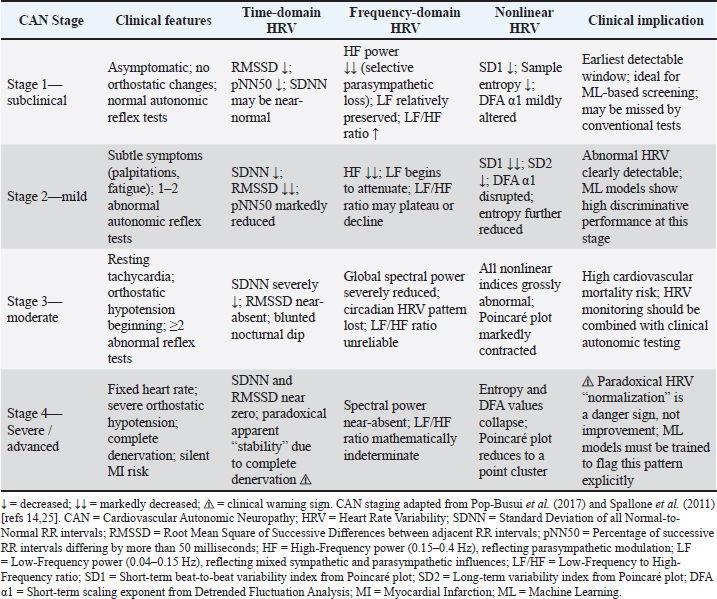
ABSTRACTHeart rate variability (HRV) has emerged as a valuable non-invasive marker for assessing autonomic nervous system function in diabetes mellitus. This narrative review examines the pathophysiological mechanisms linking HRV alterations to diabetic complications, the clinical utility of HRV as a prognostic and diagnostic tool, and the innovative application of machine learning techniques in HRV analysis. Reduced HRV is consistently observed in individuals with diabetes and serves as an early indicator of cardiovascular autonomic neuropathy, a common yet underdiagnosed complication. Traditional time-domain, frequency-domain, and nonlinear HRV metrics have demonstrated significant associations with glycemic control, microvascular complications, and cardiovascular events. Recent advances in machine learning and artificial intelligence have revolutionized HRV interpretation, enabling more sophisticated pattern recognition, risk stratification, and personalized medicine approaches. This review synthesizes current evidence on HRV pathophysiology in diabetes, evaluates established and emerging HRV assessment methods, and explores the transformative potential of computational approaches in optimizing diabetes management and preventing complications. Keywords: Autonomic neuropathy, Diabetes, Heart rate variability, Machine learning, Non linear analysis, Spectral analysis. IntroductionDiabetes mellitus represents a global health crisis affecting over 500 million individuals worldwide, with projections suggesting continued exponential growth in disease prevalence. The chronic hyperglycemic state characteristic of diabetes triggers a cascade of pathophysiological processes that extend far beyond glycemic dysregulation, profoundly affecting multiple organ systems, including the cardiovascular and autonomic nervous systems. Among the numerous complications associated with diabetes, cardiovascular autonomic neuropathy (CAN) stands out as a particularly insidious condition, often progressing silently until advanced stages when therapeutic interventions become limited (Gopalan et al., 2018; Balcıoğlu et al. 2015; Chan et al., 2020; Ezzatvar and García-Hermoso, 2023). Heart rate variability (HRV), defined as the physiological variation in the time intervals between consecutive heartbeats, serves as a window into autonomic nervous system function. The complex interplay between sympathetic and parasympathetic branches of the autonomic nervous system continuously modulates cardiac rhythm, creating beat-to-beat variations that reflect the heart’s adaptive capacity to respond to internal and external stimuli. In healthy individuals, robust HRV indicates a flexible, responsive autonomic system capable of maintaining cardiovascular homeostasis across diverse physiological demands. Conversely, diminished HRV suggests autonomic dysfunction and reduced physiological adaptability, portending increased cardiovascular risk and mortality. The recognition that HRV alterations precede clinical manifestations of diabetic autonomic neuropathy has positioned HRV assessment as a potentially valuable screening and prognostic tool. Beyond its diagnostic applications, HRV analysis has evolved from simple statistical measures to incorporate sophisticated computational approaches, including machine learning algorithms that can detect subtle patterns imperceptible to traditional analytical methods. This evolution promises to enhance early detection, risk stratification, and personalized therapeutic strategies in diabetic populations (Vinik and Ziegler, 2007; Bazmandegan et al., 2023; Banerjee and Kumar, 2023a). MethodsA literature search was conducted across PubMed/MEDLINE, Scopus, Web of Science, and IEEE Xplore databases from 1995 to 2025. The search strategy combined MeSH terms and free-text keywords using Boolean operators (AND/OR). Representative search strings used included: (“heart rate variability” OR “HRV”) AND (“diabetes mellitus” OR “diabetic autonomic neuropathy”) AND (“machine learning” OR “deep learning” OR “artificial intelligence” OR “neural network”). Studies were included if they: (i) involved human participants with confirmed diabetes mellitus (type 1 or type 2); (ii) examined HRV as a primary or secondary outcome; and (iii) were published in peer-reviewed English-language journals. Priority was given to original research articles, systematic reviews, meta-analyses, and randomized controlled trials. Studies were excluded if they were case reports with fewer than 10 participants, lacked full-text availability, or did not directly address HRV in the context of diabetes. For machine learning applications, studies demonstrating computational approaches to HRV analysis specifically in diabetic or autonomic neuropathy populations were prioritized. As this is a single-author narrative review, titles and abstracts were screened by the author against the pre-defined inclusion and exclusion criteria; any borderline cases were resolved through full-text review and consideration of relevance to the central topic. Given the narrative design of this review, a formal Preferred Reporting Items for Systematic Reviews and Meta-Analyses flow diagram and study-quality appraisal were not applied; however, risk of bias was considered narratively when interpreting study findings. Only the most representative and clinically influential studies are directly cited to maintain focus and readability. Pathophysiological mechanisms of HRV alterations in diabetesMetabolic and oxidative stress pathwaysThe pathogenesis of autonomic dysfunction in diabetes involves multiple interconnected mechanisms. Chronic hyperglycemia initiates various metabolic derangements, including enhanced polyol pathway flux, increased advanced glycation end-product formation, protein kinase C activation, and heightened oxidative stress. These biochemical aberrations converge to induce structural and functional damage to autonomic nerve fibers, particularly affecting the small unmyelinated and thinly myelinated fibers that innervate the cardiovascular system (Kumar et al., 2012; Ziegler et al., 2015; Kim et al., 2018). Oxidative stress plays a pivotal role in diabetic autonomic neuropathy development. Hyperglycemia-induced mitochondrial dysfunction generates excessive reactive oxygen species, overwhelming endogenous antioxidant defenses. This oxidative milieu damages neuronal mitochondria, disrupts axonal transport, and impairs neurotrophic factor signaling, ultimately leading to autonomic fiber degeneration. The preferential early involvement of parasympathetic fibers, which are more vulnerable to metabolic insults than sympathetic fibers, explains the characteristic pattern of initial vagal impairment observed in diabetic autonomic neuropathy (Zou et al., 2019; Kumar and Banerjee, 2023). Inflammatory and microvascular mechanismsChronic low-grade inflammation, a hallmark of diabetes, contributes significantly to autonomic dysfunction. Elevated proinflammatory cytokines, including tumor necrosis factor-alpha and interleukin-6, directly impair autonomic nerve function and promote neuroinflammation. Concurrently, diabetic microangiopathy affects the vasa nervorum, the small blood vessels supplying peripheral nerves. Endothelial dysfunction, reduced nitric oxide bioavailability, and increased vascular permeability compromise nerve perfusion, creating a hypoxic microenvironment that exacerbates neuronal injury. The temporal progression of autonomic neuropathy in diabetes follows a predictable pattern. Initial subclinical dysfunction manifests as reduced HRV, particularly affecting parasympathetic-mediated high-frequency components. As neuropathy advances, sympathetic dysfunction emerges, characterized by altered low-frequency HRV components and impaired cardiovascular reflexes. In advanced stages, autonomic denervation may paradoxically “normalize” certain HRV parameters—a critically underappreciated phenomenon. When both sympathetic and parasympathetic fibers are severely damaged, opposing influences cancel out, producing a deceptively stable but physiologically rigid cardiac rhythm. This stage-dependent behavior means that HRV values may appear normal or even improved in very advanced CAN, leading to false reassurance if interpreted without clinical context, as shown in Table 1 (Electrophysiology, T.F.O.T.E.S.O.C.T.N.A. 1996, 1996; Laakso, 2010; Ginter and Simko, 2012; Pop-Busui et al., 2017). Clinical significance and assessment of HRV in diabetesHRV measurement techniques and metricsHRV quantification encompasses multiple analytical domains, each providing distinct insights into autonomic function. Time-domain measures represent the simplest approach, calculating statistical indices from inter-beat interval series. The standard deviation of normal-to-normal intervals (SDNN) reflects overall HRV magnitude, integrating both sympathetic and parasympathetic influences. The root mean square of successive differences (RMSSD) and the percentage of successive intervals differing by more than 50 milliseconds (pNN50) predominantly capture parasympathetic modulation, demonstrating particular sensitivity to early diabetic autonomic dysfunction. Frequency-domain analysis decomposes the heart rate signal into constituent frequency bands, traditionally including very low frequency (below 0.04 Hz), low frequency (0.04–0.15 Hz), and high frequency (0.15–0.4 Hz) components. High-frequency power correlates strongly with respiratory-mediated parasympathetic activity, while low-frequency power reflects mixed sympathetic and parasympathetic influences with potential baroreceptor involvement. The low-frequency to high-frequency ratio, though controversial, has been proposed as an index of sympathovagal balance, with elevated ratios suggesting sympathetic predominance or parasympathetic withdrawal (Saleem et al., 2012; Dimova et al., 2017; Banerjee et al., 2019). Table 1. HRV changes across stages of diabetic cardiovascular sutonomic neuropathy (CAN).
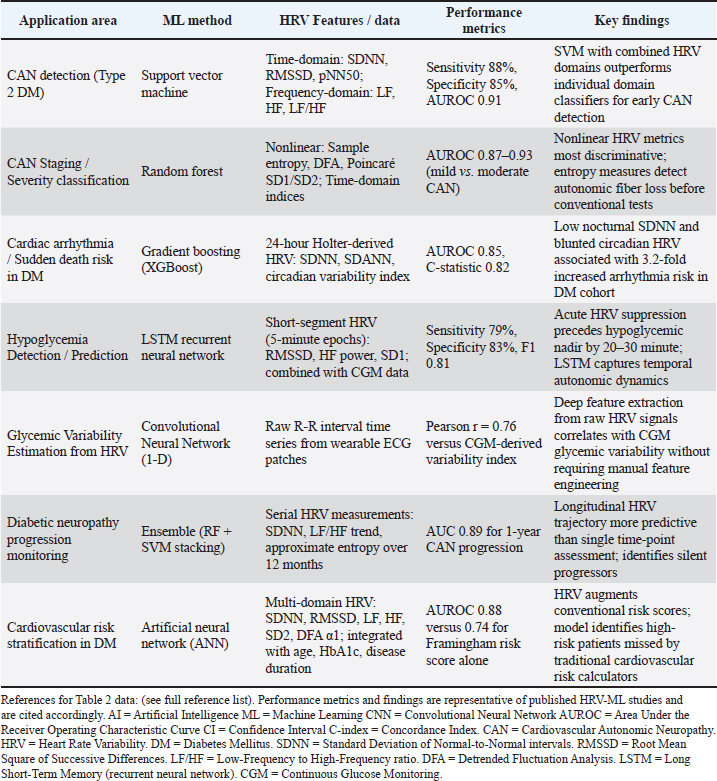
Nonlinear HRV metrics capture the complex, chaotic nature of cardiac rhythm regulation. Poincaré plots visualize beat-to-beat variability dynamics, with SD1 representing short-term variability and SD2 reflecting long-term variability. Entropy measures, including approximate entropy and sample entropy, quantify signal irregularity and complexity, potentially offering superior prognostic value compared to traditional linear measures. Detrended fluctuation analysis assesses fractal scaling properties, revealing altered correlation structures in diabetic individuals that may precede conventional HRV parameter changes (Maser et al., 2003; Banerjee, 2026). HRV as a prognostic markerExtensive epidemiological evidence establishes reduced HRV as a robust predictor of adverse outcomes in diabetes. Large-scale prospective studies consistently demonstrate that diabetic individuals with diminished HRV face substantially elevated risks of cardiovascular mortality, sudden cardiac death, and arrhythmic events. The prognostic significance extends beyond cardiovascular endpoints, with HRV parameters associating with nephropathy progression, retinopathy severity, and overall mortality. Reduced HRV in diabetes correlates with multiple metabolic parameters, including glycemic variability, insulin resistance, and inflammatory markers. Importantly, HRV alterations demonstrate independent predictive value beyond traditional risk factors, suggesting that autonomic dysfunction contributes to adverse outcomes through mechanisms distinct from conventional cardiovascular risk pathways. The capacity of HRV to identify high-risk individuals during asymptomatic disease stages positions it as a potentially valuable tool for targeted intervention strategies (Khandoker et al., 2009a; Roy and Ghatak, 2013; Pham et al., 2021; Banerjee 2025). Short-term HRV recordings, typically ranging from 5 minutes to 24 hours, have demonstrated clinical utility in diverse diabetic populations. Ultra-short-term measurements, lasting just 1 to 5 minutes, show promise for point-of-care screening applications, though standardization challenges persist. Twenty-four-hour Holter monitoring provides comprehensive autonomic assessment, capturing circadian HRV patterns and identifying individuals with blunted nocturnal HRV recovery, a phenomenon associated with heightened cardiovascular risk (Porojan et al., 2010; Spallone et al., 2011). Machine learning applications in HRV analysis for diabetesFoundations of machine learning in HRV researchThe integration of machine learning into HRV research represents a paradigm shift from hypothesis-driven to data-driven approaches. Traditional statistical methods, while valuable, often fail to capture the intricate, nonlinear relationships between HRV parameters and clinical outcomes. Machine learning algorithms excel at identifying complex patterns within high-dimensional datasets, detecting subtle HRV signatures that elude conventional analytical techniques. Supervised learning algorithms, including support vector machines, random forests, and gradient boosting methods, have demonstrated impressive performance in diabetic autonomic neuropathy detection and classification. These approaches leverage labeled datasets to learn discriminative HRV features distinguishing diabetic individuals with and without autonomic complications. Feature engineering, the process of selecting and transforming relevant HRV parameters, critically influences model performance. Advanced machine learning pipelines often combine multiple HRV domains—time, frequency, and nonlinear metrics—with demographic and clinical variables to maximize predictive accuracy (Rasic-Milutinovic et al., 2010; Banerjee and Kumar, 2023b). Deep learning and neural networksDeep learning architectures, particularly convolutional neural networks and recurrent neural networks, have revolutionized automated HRV analysis. These models can process raw electrocardiographic signals directly, automatically extracting relevant features without manual engineering. Long short-term memory networks excel at capturing temporal dependencies in heart rate time series, while one-dimensional convolutional networks effectively identify local patterns within Electrocardiogram (ECG) waveforms. Recent innovations include attention mechanisms that highlight physiologically relevant signal segments and transfer learning approaches that leverage pre-trained models to overcome limited training data challenges. Ensemble methods combining multiple neural network architectures often achieve superior performance compared to individual models, enhancing both accuracy and robustness. The interpretability of deep learning models remains a challenge, prompting the development of explainable Artificial intelligence techniques that provide insights into model decision-making processes, crucial for clinical acceptance and regulatory approval. Representative HRV-based ML applications are summarized in Table 2 (Khandoker et al., 2009b; Acharya et al., 2013; Vettoretti et al., 2017; Petrie et al., 2018; Goldenberg et al., 2019; Tiwari et al., 2020; Alkhodari et al., 2021). Clinical applications and risk prediction modelsMachine learning-based HRV analysis has yielded practical clinical applications across multiple domains. Diabetic autonomic neuropathy screening models achieve sensitivities and specificities exceeding 85%, potentially enabling widespread population screening. Cardiovascular event prediction models incorporating machine learning-derived HRV features demonstrate improved discrimination compared to conventional risk scores, facilitating personalized risk stratification. Glycemic control prediction represents another promising application, with algorithms correlating HRV patterns with glucose variability and hypoglycemic episodes. These models could inform insulin dosing adjustments and hypoglycemia prevention strategies. Machine learning approaches have also enabled real-time HRV monitoring through wearable devices, generating continuous autonomic function assessments that capture dynamic changes related to physical activity, stress, and metabolic fluctuations (Ozturk et al., 2009; Contreras and Vehi, 2018). An important and emerging translational dimension concerns the intersection of continuous glucose monitoring (CGM)-derived metrics and HRV-based autonomic signals. Farhadi Ghalati et al. (2024) demonstrated in a pilot study of type 2 diabetes patients with chronic kidney disease that individualized glucose level monitoring could predict risk for bradycardia—a finding with direct implications for HRV research. Bradycardia in diabetes is fundamentally an autonomic phenotype: impaired parasympathetic withdrawal and blunted sympathoadrenal responses reduce the heart’s capacity to accelerate, producing inappropriately low resting heart rates that HRV analysis can potentially detect earlier than clinical symptoms manifest. The glucose-derived risk signal described in that study and the autonomic dysfunction captured by HRV are therefore complementary rather than redundant. Glucose variability drives acute autonomic perturbations—manifested as transient HRV changes during hypoglycemic and hyperglycemic excursions—while structural autonomic neuropathy produces more sustained HRV suppression. Future ML models should therefore integrate CGM-derived individualized glucose features (e.g., time-in-range, glycemic variability index) alongside HRV time-domain, frequency-domain, and nonlinear metrics, as multimodal fusion architectures could substantially improve the prediction of clinically relevant arrhythmic endpoints such as bradycardia, enhance interpretability for clinicians, and generate more actionable risk scores than either modality alone (Ozturk et al., 2009; Farhadi Ghalati et al., 2024). Table 2. Machine learning applications in HRV-based diabetic autonomic neuropathy detection and cardiovascular risk prediction.
Challenges and future directionsDespite impressive advances, several challenges impede widespread machine learning adoption in clinical HRV applications. Data heterogeneity, arising from variable recording conditions, device characteristics, and patient populations, complicates model generalization. Standardization efforts addressing preprocessing protocols, artifact handling, and feature calculation methods are essential for reproducible research and clinical translation. Model validation presents another critical challenge. Many published algorithms demonstrate excellent performance on development datasets but lack external validation in independent cohorts. Prospective clinical trials evaluating machine learning-guided interventions remain scarce, limiting evidence for clinical utility. Regulatory pathways for AI-based medical devices continue evolving, requiring careful consideration of safety, efficacy, and algorithmic transparency (Li et al., 2015; Pan et al., 2023). Privacy and data security concerns assume heightened importance as HRV monitoring increasingly leverages consumer wearables and mobile health platforms. Ensuring robust data protection while maintaining analytical capability requires sophisticated technical solutions. The digital divide may exacerbate health disparities, as advanced HRV monitoring technologies remain inaccessible to underserved populations most vulnerable to diabetic complications (Istenes et al.,2014; Wulsin et al., 2021). Critical appraisal: from high AUROC to clinical usabilityA recurring pattern in the ML-HRV literature warrants critical examination: the near-ubiquitous reporting of high area under the receiver operating characteristic curve (AUROC) values frequently exceeding 0.85, alongside a near-complete absence of prospective clinical validation. High AUROC on internal test sets does not equate to clinical usability, for several important reasons. First, most published models are trained and tested on retrospective, single-center datasets that may inadequately represent the heterogeneity of real-world diabetic populations in terms of disease duration, comorbidities, medication use, and recording conditions. When these models are applied to external cohorts, performance frequently deteriorates substantially, a generalization gap well documented in AI medical literature. Second, AUROC optimizes rank-order discrimination but does not capture calibration (whether predicted probabilities match observed risks), clinical net benefit, or the downstream impact on patient management. A model with AUROC 0.90 that consistently mislabels the highest-risk patients has limited clinical value. Third, the algorithm development-to-bedside gap reflects structural barriers beyond statistical performance: lack of interoperability with electronic health record systems, absence of regulatory-grade validation studies, uncertainty about liability when AI-assisted decisions contribute to adverse outcomes, and clinician unfamiliarity with algorithmic outputs. Prospective trials in which HRV-based ML tools are embedded in care pathways, with pre-specified endpoints such as reduction in undetected CAN, hypoglycemic events, or arrhythmic complications, are urgently needed before guideline bodies can recommend routine implementation. Until such evidence exists, high AUROC values should be interpreted as proof-of-concept rather than evidence of clinical readiness (Li et al., 2015; Pan et al., 2023). Integration of HRV assessment into diabetes managementIncorporating HRV assessment into routine diabetes care necessitates addressing multiple practical considerations. Current guidelines recommend cardiovascular autonomic neuropathy screening in type 1 diabetes 5 years post-diagnosis and in type 2 diabetes at diagnosis, yet implementation remains suboptimal. Traditional autonomic function tests, including heart rate response to deep breathing and Valsalva maneuver, are time-intensive and require specialized expertise. Simplified HRV assessment protocols compatible with primary care settings could enhance screening uptake. The proliferation of consumer wearable devices with HRV monitoring capabilities presents opportunities and challenges. While potentially democratizing access to autonomic assessment, these devices often lack validation against clinical-grade equipment, raising accuracy concerns. Establishing minimum performance standards and validation requirements for consumer HRV devices intended for medical purposes represents an urgent priority (Bissinger et al., 2009; Al-Trad et al., 2015; Kodama et al. 2021; Shen et al. 2022). Therapeutic interventions targeting HRV improvement in diabetes span pharmacological and lifestyle approaches. Exercise training consistently enhances HRV parameters, likely through multiple mechanisms including improved glycemic control, reduced oxidative stress, and enhanced autonomic responsiveness. Glycemic optimization through intensive diabetes management demonstrates beneficial HRV effects, though whether HRV improvement translates to reduced cardiovascular events requires confirmation through dedicated trials (Pop-Busui et al., 2010; Farhadi Ghalati et al., 2024). ConclusionHeart rate variability assessment has evolved from a research curiosity to a clinically relevant tool for evaluating autonomic function in diabetes mellitus. The pathophysiological mechanisms underlying HRV alterations in diabetes are increasingly well characterized, involving metabolic derangements, oxidative stress, inflammation, and microvascular dysfunction that preferentially damage autonomic nerve fibers. Reduced HRV serves as both an early marker of autonomic neuropathy and a robust predictor of adverse cardiovascular outcomes, demonstrating independent prognostic value beyond traditional risk factors. The advent of machine learning and artificial intelligence has transformed HRV analysis capabilities, enabling sophisticated pattern recognition, improved diagnostic accuracy, and personalized risk prediction. Deep learning architectures can process raw cardiac signals with minimal preprocessing, automatically identifying subtle autonomic dysfunction signatures imperceptible to conventional methods. These computational advances promise to enhance early detection, risk stratification, and therapeutic monitoring in diabetic populations. As the diabetes epidemic continues unabated, innovative approaches to complication prevention and early detection assume paramount importance. HRV assessment, particularly when enhanced through machine learning techniques, represents a promising tool for identifying high-risk individuals, guiding therapeutic interventions, and ultimately improving outcomes for the millions affected by diabetes mellitus worldwide. Future research should focus on validating these approaches in real-world clinical settings and determining whether HRV-guided management strategies translate to tangible health benefits. AcknowledgmentsNone. Conflict of interestThe author declares that there is no conflict of interest. FundingNone. Authors’ contributionsOne author in this review article. Data availabilityAll data were provided in the manuscript. ReferencesAcharya, U.R., Faust, O., Kadri, N.A., Suri, J.S. and Yu, W. 2013. Automated identification of normal and diabetes heart rate signals using nonlinear measures. Comput. Biol. Med. 43(10), 1523–1529; doi:10.1016/j.compbiomed.2013.05.024 Alkhodari, M., Rashid, M., Mukit, M.A., Ahmed, K.I., Mostafa, R., Parveen, S. and Khandoker, A.H. 2021. Screening cardiovascular autonomic neuropathy in diabetic patients with microvascular complications using machine learning: a 24-hour heart rate variability study. IEEE. Access. 9, 119171–119187; doi:10.1109/ACCESS.2021.3104580 Al-Trad, B.A., Faris, M.A.I.E., Al-Smadi, M., Bashir, A., Mansi, M. and Alaraj, M. 2015. Cardiac autonomic dysfunction in young obese males is not associated with disturbances in pituitary-thyroid axis hormones. Eur. Rev. Med. Pharmacol. Sci. 19(9), 1689–1695. Balcıoğlu, A.S. 2015. Diabetes and cardiac autonomic neuropathy: clinical manifestations, cardiovascular consequences, diagnosis and treatment. World J. Diabetes 6, 80–91. Banerjee, A. 2025. Artificial intelligence enabled mobile health technologies in arrhythmias—an opinion article on recent findings. Front. Cardiovasc. Med. 12, 1548554. Banerjee, A. and Kumar, S. 2023a. Cardiovascular reactivity to stress in long-term yoga practitioners. J. Fam. Med. Prim. Care. 12(2), 383–387. Banerjee, A. and Kumar, S. 2023b. Dysautonomia in ‘long COVID’: case report. J. Fam. Med. Prim. Care 12(10), 2513–2515. Banerjee, A., Khurana, I. and Dhull, C.S. 2019. Normal tension glaucoma versus primary open-angle glaucoma—the autonomic perspective. Natl. J. Physiol. Pharm. Pharmacol. 9(6), 510–514. Banerjee, A. 2026. Understanding the shortcomings of heart rate variability as a tool for autonomic analysis. Front. Physiol. 17, 1760160. Bazmandegan, G., Abbasifard, M., Nadimi, A.E., Alinejad, H. and Kamiab, Z. 2023. Cardiovascular risk factors in diabetic patients with and without metabolic syndrome: a study based on the Rafsanjan cohort study. Sci. Rep. 13, 559. Bissinger, A., Grycewicz, T., Grabowicz, W. and Lubinski, A. 2009. The effect of diabetic autonomic neuropathy on basic, short and long-time heart rate variability measures. Arch. Med. Sci. 5(3), 423–429. Chan, J.C.N., Lim, L. and Wareham, N.J. 2020. The lancet commission on diabetes: using data to transform diabetes care and patient lives. Lancet 396(10267), 2019–2082. Contreras, I. and Vehi, J. 2018. Artificial intelligence for diabetes management and decision support: literature review. J. Med. Internet Res. 20(5), e10775. Dimova, R., Tankova, T., Guergueltcheva, V., Tournev, I., Chakarova, N. and Grozeva, G. 2017. Risk factors for autonomic and somatic nerve dysfunction in different stages of glucose tolerance. J. Diabetes. Complications. 31(3), 537–543. Electrophysiology, T.F.O.T.E.S.O.C.T.N.A. 1996. Heart rate variability: standards of measurement, physiological interpretation and clinical use. Circulation 93(5), 1043–1065. Ezzatvar, Y. and García-Hermoso, A. 2023. Global estimates of diabetes-related amputations incidence in 2010–2020: a systematic review and meta-analysis. Diabetes Res. Clin. Pract. 195, 110194. Farhadi Ghalati, P., E. Samadi, M., Verket, M., Balfanz, P., Müller-Wieland, D., Jonas, S., Napp, A., Wanner, C., Ketteler, M., Vassiliadou, A., Heidenreich, S., Deserno, T., Hetzel, G., Fliser, D., Kelm, M., Floege, J., Marx, N. and Schuppert, A. 2024. Monitoring individualized glucose levels predicts risk for bradycardia in type 2 diabetes patients with chronic kidney disease: a pilot study. Sci. Rep. 14(1), 30290. Ginter, E. and Simko, V. 2012. Type 2 diabetes mellitus, pandemic in 21st century. Adv. Exp. Med. Biol. 771, 42–50. Goldenberg, I., Goldkorn, R., Shlomo, N., Einhorn, M., Levitan, J. and Kuperstein, R. 2019. Heart rate variability for risk assessment of myocardial infarction in patients without known cardiovascular disease: the HRV-MI study. J. Am. Heart Assoc. 8(21), e011196 Gopalan, A., Mishra, P., Alexeeff, S.E., Blatchins, M.A., Kim, E., Man, A.H. and Grant, R.W. 2018. Prevalence and predictors of delayed clinical diagnosis of type 2 diabetes: a longitudinal cohort study. Diabet. Med. 35(9), 1655–1662. Istenes, I., Körei, A.E., Putz, Z., Németh, N., Martos, T. and Keresztes, K. 2014. Heart rate variability is severely impaired among type 2 diabetic patients with hypertension. Diabetes Metab. Res. Rev. 30(4), 305–312. Khandoker, A.H., Jelinek, H.F. and Palaniswami, M. 2009a. Identifying diabetic patients with cardiac autonomic neuropathy by heart rate complexity analysis. Biomed. Eng. Online. 8, 3. Khandoker, A.H., Karmakar, C., Brennan, M., Voss, A. and Palaniswami, M. 2009b. Quantifying the autonomic nervous system dysfunction during diabetes using complexity analysis of heart rate variability. Comput. Cardiol. 36, 733–736. Kim, Y.Y., Lee, J.S., Kang, H.J. and Park, S.M. 2018. Effect of medication adherence on long-term all-cause-mortality and hospitalization for cardiovascular disease in 65,067 newly diagnosed type 2 diabetes patients. Sci. Rep. 8, 12190. Kodama, S., Fujihara, K., Shiozaki, H., Horikawa, C., Yamada, M.H., Sato, T., Yaguchi, Y., Yamamoto, M., Kitazawa, M., Iwanaga, M., Matsubayashi, Y. and Sone, H. 2021. Ability of current machine learning algorithms to predict and detect hypoglycemia in patients with diabetes mellitus: meta-analysis. JMIR. Diabetes. 6(1), e22458. Kumar, K., Modi, K., Basile, A. and Kota, S. 2012. Profile of microvascular disease in type 2 diabetes in a tertiary health care hospital in India. Ann. Med. Health Sci. Res. 2(2), 103. Kumar, S. and Banerjee, A. 2023. Quantification of dysautonomia in major depressive disorder using the Composite Autonomic Scoring Scale-31 (COMPASS-31). Cureus 15(10), e48008. Laakso, M. 2010. Cardiovascular disease in type 2 diabetes from population to man to mechanisms: the Kelly West Award Lecture 2008. Diabetes Care 33(2), 442–449. Li, X., Yu, S., Chen, H., Lu, C., Zhang, K. and Li, F. 2015. Cardiovascular autonomic function analysis using approximate entropy from 24-h heart rate variability and its frequency components in patients with type 2 diabetes. J. Diabetes Investig. 6(2), 227–235. Maser, R.E., Mitchell, B.D., Vinik, A.I. and Freeman, R. 2003. The association between cardiovascular autonomic neuropathy and mortality in individuals with diabetes: a meta-analysis. Diabetes Care 26(6), 1895–1901. Ozturk, N.A., Gokturk, H.S., Demir, M., Erdogan, D., Unler, G.K., Gur, G. and Yilmaz, U. 2009. The effect of autonomous neuropathy on bowel preparation in type 2 diabetes mellitus. Int. J. Colorectal. Dis. 24(12), 1407–1412. Pan, H., Sun, J., Luo, X., Ai, H., Zeng, J., Shi, R. and Zhang, A. 2023. A risk prediction model for type 2 diabetes mellitus complicated with retinopathy based on machine learning and its application in health management. Front. Med. (Lausanne). 10, 1136653. Petrie, J.R., Guzik, T.J. and Touyz, R.M. 2018. Diabetes, hypertension, and cardiovascular disease: clinical insights and vascular mechanisms. Can. J. Cardiol. 34(5), 575–584. Pham, T., Lau, Z.J., Chen, S.H.A. and Makowski, D. 2021. Heart rate variability in psychology: a review of HRV indices and an analysis tutorial. Sensors. (Basel). 21(12), 3998. Pop-Busui, R., Boulton, A.J.M., Feldman, E.L., Bril, V., Freeman, R., Malik, R.A., Sosenko, J.M. and Ziegler, D. 2017. Diabetic neuropathy: a position statement by the American Diabetes Association. Diabetes. Care. 40(1), 136–154. Pop-Busui, R., Evans, G.W., Gerstein, H.C., Fonseca, V., Fleg, J.L., Hoogwerf, B.J., Genuth, S., Grimm, R.H., Corson, M.A. and Prineas, R. 2010. Effects of cardiac autonomic dysfunction on mortality risk in the action to control cardiovascular risk in diabetes (ACCORD) trial. Diabetes. Care. 33(7), 1578–1584. Porojan, M., Costin, S., Poantă, L., Cerghizan, A., Pop, D. and Dumitraşcu, D.L. 2010. Autonomic neuropathy and plasma catecholamine in patients with diabetes mellitus. Romanian J. Intern. Med. 48(4), 341–345. Rasic-Milutinovic, Z.R., Milicevic, D.R., Milovanovic, B.D., Perunicic-Pekovic, G.B. and Pencic, B.D. 2010. Do components of metabolic syndrome contribute to cardiac autonomic neuropathy in non-diabetic patients?. Saudi. Med. J. 31(6), 650–657. Roy, B. and Ghatak, S. 2013. Nonlinear methods to assess changes in heart rate variability in type 2 diabetic patients. Arq. Bras. Cardiol. 101(4), 317–327. Saleem, S., Hussain, M.M., Majeed, S.M.I. and Khan, M.A. 2012. Gender differences of heart rate variability in healthy volunteers. JPMA. J. Pak. Med. Assoc. 62(5), 422–425. Shen, L., Li, H. and Zhou, S. 2022. Machine learning for heart rate variability analysis in diabetes management: a systematic review. Diabetes. Metab. Res. Rev. 38(1), e3515. Spallone, V., Bellavere, F., Scionti, L., Maule, S., Quadri, R., Bax, G., Melga, P., Viviani, G.L., Esposito, K. and Morganti, R. 2011. Recommendations for the use of cardiovascular tests in diagnosing diabetic autonomic neuropathy. Nutr. Metab. Cardiovasc. Dis. 21(1), 69–78. Tiwari, P., Colborn, K.L., Smith, D.E., Hu, X., Ghosh, D. and Rosenberg, M.A. 2020. Assessment of a machine learning model applied to harmonized electronic health record data for the prediction of incident atrial fibrillation. JAMA. Cardiol. 5(5), 545–553. Vettoretti, M., Facchinetti, A., Sparacino, G. and Cobelli, C. 2017. A model of self-monitoring blood glucose measurement error. J. Diabetes. Sci. Technol. 11(4), 724–735. Vinik, A.I. and Ziegler, D. 2007. Diabetic cardiovascular autonomic neuropathy. Circulation 115(4), 387–397. Wulsin, L., Herman, J. and Bastian, L.A. 2021. Evaluating the utility of heart rate variability in primary care. J. Psychosom. Res. 140, 110308. Ziegler, D., Voss, A., Rathmann, W., Strom, A., Kolberg, S. and Fuhrmann, H. 2015. Increased prevalence of cardiac autonomic dysfunction at different degrees of glucose intolerance: the KORA S4 survey. Diabetologia 58(6), 1218–1227. Zou, X., Zhou, X., Zhu, Z. and Ji, L. 2019. Novel subgroups of patients with adult-onset diabetes in Chinese and US populations. Lancet Diabetes Endocrinol. 7(1), 9–11. | ||
| How to Cite this Article |
| Pubmed Style Arijita Banerjee. The role of heart rate variability in diabetes mellitus: From pathophysiology to machine learning applications. Natl J Physiol Pharm Pharmacol. 2026; 16(1): 56-64. doi:10.5455/NJPPP.2026.v16.i1.8 Web Style Arijita Banerjee. The role of heart rate variability in diabetes mellitus: From pathophysiology to machine learning applications. https://www.njppp.com/?mno=308192 [Access: June 26, 2026]. doi:10.5455/NJPPP.2026.v16.i1.8 AMA (American Medical Association) Style Arijita Banerjee. The role of heart rate variability in diabetes mellitus: From pathophysiology to machine learning applications. Natl J Physiol Pharm Pharmacol. 2026; 16(1): 56-64. doi:10.5455/NJPPP.2026.v16.i1.8 Vancouver/ICMJE Style Arijita Banerjee. The role of heart rate variability in diabetes mellitus: From pathophysiology to machine learning applications. Natl J Physiol Pharm Pharmacol. (2026), [cited June 26, 2026]; 16(1): 56-64. doi:10.5455/NJPPP.2026.v16.i1.8 Harvard Style Arijita Banerjee (2026) The role of heart rate variability in diabetes mellitus: From pathophysiology to machine learning applications. Natl J Physiol Pharm Pharmacol, 16 (1), 56-64. doi:10.5455/NJPPP.2026.v16.i1.8 Turabian Style Arijita Banerjee. 2026. The role of heart rate variability in diabetes mellitus: From pathophysiology to machine learning applications. National Journal of Physiology, Pharmacy and Pharmacology, 16 (1), 56-64. doi:10.5455/NJPPP.2026.v16.i1.8 Chicago Style Arijita Banerjee. "The role of heart rate variability in diabetes mellitus: From pathophysiology to machine learning applications." National Journal of Physiology, Pharmacy and Pharmacology 16 (2026), 56-64. doi:10.5455/NJPPP.2026.v16.i1.8 MLA (The Modern Language Association) Style Arijita Banerjee. "The role of heart rate variability in diabetes mellitus: From pathophysiology to machine learning applications." National Journal of Physiology, Pharmacy and Pharmacology 16.1 (2026), 56-64. Print. doi:10.5455/NJPPP.2026.v16.i1.8 APA (American Psychological Association) Style Arijita Banerjee (2026) The role of heart rate variability in diabetes mellitus: From pathophysiology to machine learning applications. National Journal of Physiology, Pharmacy and Pharmacology, 16 (1), 56-64. doi:10.5455/NJPPP.2026.v16.i1.8 |